
Inactive players are a goldmine for iGaming operators. These are users who once engaged with your platform but haven’t logged in for 7–30 days. Reactivating them can significantly boost revenue, and bonuses are one of the most effective tools to bring them back. Here’s how you can make it work:
- Bonus Types: Use deposit matches, cashback offers, free spins, or exclusive perks tailored to player preferences.
- Segmentation: Group players by inactivity length, deposit history, game preferences, and past bonus usage for targeted offers.
- Automation: Platforms like InTarget let you set up behavior-based triggers, ensuring timely and personalized campaigns.
- Timing: Act fast – reach out within 7 days of inactivity with escalating offers via email, SMS, and push notifications.
- Clear Terms: Use simple, transparent bonus terms to build trust and avoid confusion.
Bonus Types and How They Work for Reactivation
Main Bonus Types for Bringing Players Back
Different bonus types can impact reactivation efforts in distinct ways.
Deposit matches are among the simplest and most effective options. These bonuses offer players a percentage match on their deposit – commonly ranging from 25% to 100%, with limits often set at $1,000. This provides a clear financial incentive, especially for players who have previously made deposits.
Cashback offers return a percentage of a player’s losses over a set period, typically between 10% and 15%. This type of bonus appeals to players hesitant to risk more money after experiencing losses or extended inactivity, offering a sense of security.
Free spins cater to slot enthusiasts by delivering immediate rewards without requiring a deposit. When distributed in smaller, daily increments, these bonuses encourage consistent engagement and can motivate players to deposit funds.
Exclusive game access or VIP perks are particularly effective for high-value or loyal players. These could include private tournaments, personalized bonuses, or early access to new games. Such tailored offers help build a deeper emotional connection with players seeking recognition beyond standard promotions.
By aligning these bonus types with specific player behaviors, you can maximize reactivation efforts.
Matching Bonuses to Player Segments
Choosing the right bonus means understanding what motivates different player groups.
- Slot Players: Free spins are a natural fit, offering instant rewards with minimal risk. Using player data to highlight their favorite games can make these offers even more appealing.
- Sports Bettors: This group values calculated risks, so wager-based incentives like customized deposit matches or risk-free bets often resonate well.
- High Rollers and Loyal Players: Cashback deals or exclusive perks acknowledge their importance and foster loyalty.
For players inactive for up to two weeks, straightforward incentives like deposit matches or free spins can be effective. On the other hand, players who’ve been inactive for longer periods may need more enticing, multi-channel offers – delivered via push notifications, emails, or SMS – to draw them back into the action.
How to Segment Inactive Players for Better Targeting
Segmentation transforms generic reactivation campaigns into tailored strategies by aligning specific bonus offers with distinct player behaviors. This approach ensures your efforts are more precise and effective.
Automated behavioral scoring can revive up to 21% of hesitant inactive players by pinpointing what they need, when they need it, and the best way to reach them.
What to Use for Segmentation
To make your segmentation efforts effective, focus on aligning bonus types with player motivations.
- Inactivity length: This refers to how long it’s been since a player’s last login or game session. Players inactive for fewer than seven days might respond well to smaller bonuses like free spins. Those who’ve been away longer often need bigger incentives, such as cashback offers or VIP perks.
- Deposit history: Understanding deposit patterns helps you distinguish high rollers from casual players. High rollers may appreciate exclusive perks, while casual depositors might respond better to smaller, more frequent bonuses.
- Game preferences: Knowing what players enjoy is crucial. Slot players may prefer free spins on specific games they love. Sports bettors often respond to risk-free bets or enhanced odds, while live casino players might value exclusive table access. Look at data like spin counts, win amounts, and payout trends to identify their preferences.
- Past bonus usage: This reveals who actively engages with promotions and who tends to ignore them. Analyzing this data helps fine-tune your offers to increase engagement.
Using CRM Tools for Automated Segmentation
Platforms like InTarget make segmentation seamless by consolidating transaction history, game activity, and communication records into one system. This automation is a game-changer for running efficient bonus campaigns.
InTarget uses over 50 behavior-based triggers linked to events like registration, logins, deposits, gameplay, or custom webhooks. You can design player journeys that adapt in real time, based on conditions like "hasn’t deposited in 10 days" or "played slots but not table games in the last 30 days."
The platform’s visual campaign builder is entirely code-free. You can create segments using tools like True/False splits, A/B testing, and "Wait Until" conditions that react to player activity – or inactivity. Period-specific conditions allow you to target players based on their activity over the last N days, during a campaign, or even throughout their entire history.
"InTarget transformed our retention strategy completely. We increased player LTV by 35% in just 3 months. The automation capabilities are incredible, and the iGaming-specific features save us hours every single day." – Vlasta C, Head of Retention
Another standout feature is the AI Data Helper, which answers questions in plain English. For example, you can ask, "Which players haven’t made a deposit in the last 10 days?" or "What’s the average deposit by country?" and get instant, data-driven insights – no SQL skills or data team required. Plus, setup is quick, taking about a week, compared to the months it typically takes with generic CRMs.
With these insights at your fingertips, you can craft bonus reactivation campaigns that speak directly to the needs of each player segment, increasing your chances of winning them back.
How to Build a Bonus Reactivation Campaign
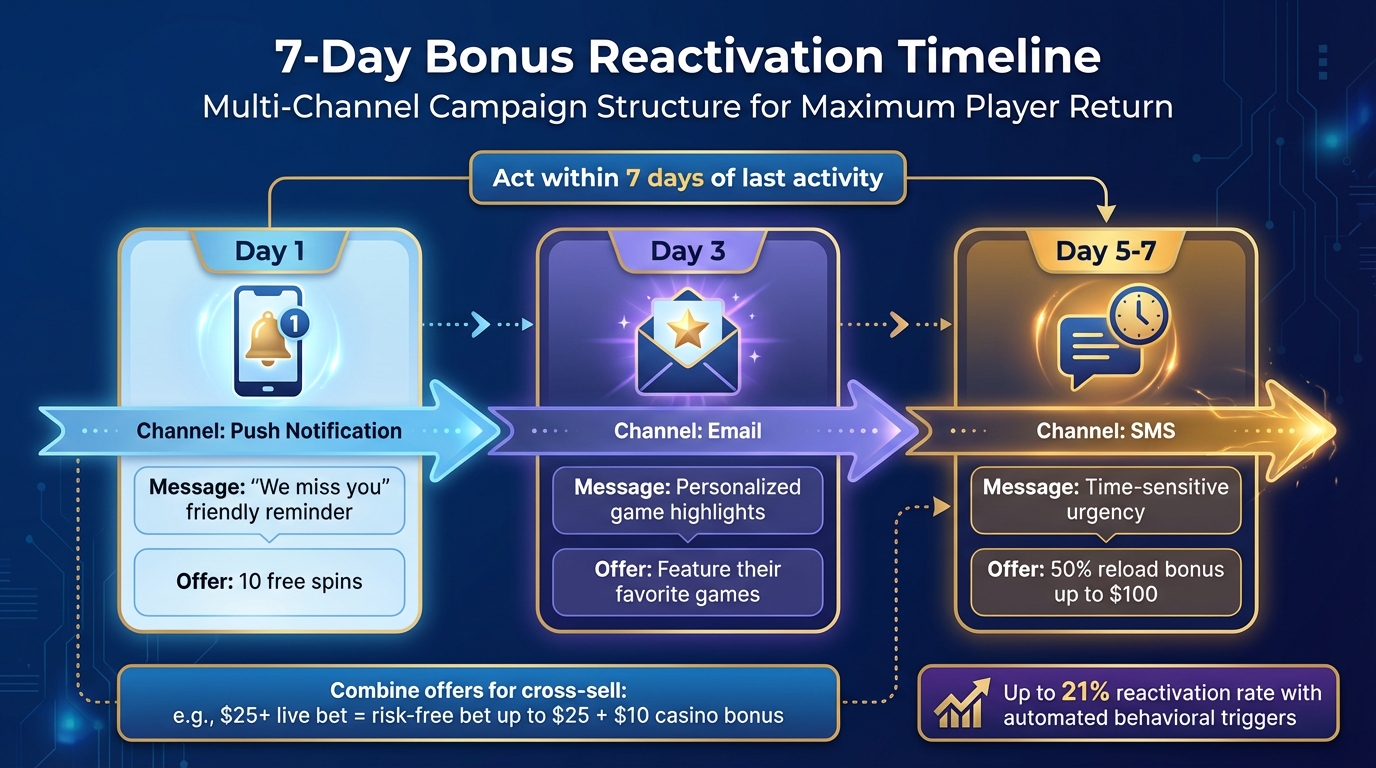
7-Day Player Reactivation Campaign Timeline for iGaming Operators
Creating a reactivation campaign that works requires a mix of timely communication, automation, and straightforward terms. The key is to act quickly – reach out within 7 days of a player’s last activity. The sooner you engage, the better your chances of bringing them back.
When to Send Offers and How to Structure Them
Timing is everything when it comes to reactivation. For U.S. iGaming operators, a well-planned sequence might look like this:
- Day 1: Send a push notification with a friendly "We miss you" message and offer 10 free spins to make it easy for the player to return.
- Day 3: Follow up with a personalized email highlighting their favorite games.
- Day 5-7: Send an SMS with a time-sensitive offer, such as a 50% reload bonus up to $100.
Combining bonuses can also boost response rates. For example, sports bettors might respond well to an offer like: "Place a $25+ live bet and get a risk-free bet up to $25 if it loses, plus a $10 casino bonus." This approach not only encourages cross-sell opportunities but also helps manage costs. To keep things consistent, automate these offers for timely and seamless engagement.
Setting Up Automated Triggers
Once your offer schedule is ready, automation ensures everything runs smoothly. Lifecycle marketing tools make it easy to set up behavior-driven reactivation campaigns. Platforms like InTarget allow you to create automated journeys with triggers based on player activity. For example:
- "No session for 3 days" could trigger a quick reminder.
- "No session for 7 days" might activate the first reactivation bonus.
- "No session for 30 days" could send a more enticing comeback package.
Advanced tools like True/False splits, A/B testing, and "Wait Until" conditions let you fine-tune your campaigns. If a player returns after the initial bonus, you can follow up with a smaller reload or loyalty points the next week. If they don’t return, try a refreshed offer before eventually removing them from the flow to avoid overcommunication. Recurring campaigns can also re-engage players who go inactive again, keeping the cycle going without extra effort.
Writing Clear Bonus Terms
Clear bonus terms are just as important as the offers themselves. They help build trust and encourage players to return. Use plain U.S. English and include a concise bullet list in your promo content that covers the essentials:
- Wagering requirements (e.g., "20x wagering on bonus amount within 7 days").
- Eligible games.
- Minimum deposit (e.g., "Minimum deposit: $25").
- Maximum bonus cap (e.g., "Up to $150").
- Validity period with clear U.S. date/time and time zone (e.g., "Valid until 03/31/2026, 11:59 PM ET").
Make sure to highlight any restricted states or regulatory limitations, as U.S. regulations can vary widely. Include links to responsible gambling resources in all communications, and ensure players in self-exclusion or cooling-off periods are automatically removed from reactivation flows. Clear, transparent terms not only meet legal requirements but also protect your brand and foster long-term trust with players in the U.S. market.
Tracking and Improving Campaign Results
To ensure your bonus campaigns are both effective and profitable, it’s essential to monitor key metrics. These insights tie the entire process together – from initial campaign design to the real-time adjustments discussed earlier. For instance, your main KPI, reactivation rate, can be calculated by dividing the number of returning players by the total offers sent (e.g., 150 returning players out of 1,000 offers equals a 15% reactivation rate). Additionally, tracking the bonus redemption rate helps gauge how clear and appealing your offers are. Other metrics like deposit frequency and lifetime value (LTV) are equally important. Personalized bonuses, for example, can increase deposit frequency by as much as 25% and boost LTV by up to 30% for long-term players.
Metrics That Matter
Your focus should remain on the most critical KPIs. These include reactivation rate, bonus redemption rate, average deposit value (ADV), and the churn rate post-reactivation – which measures how many reactivated players go inactive again within 30 or 60 days. For U.S.-based operators, tracking ROI at the player level in USD is particularly important. This involves comparing the cost of bonuses to the incremental revenue generated, ensuring campaigns achieve both scale and profitability. A well-organized CRM dashboard can simplify this process, displaying data such as total inactive players targeted, offers sent by channel (email, SMS, push notifications), and revenue generated per message or campaign step. These metrics provide the foundation for the real-time adjustments discussed below.
Using Real-Time Data and AI for Campaign Monitoring
Real-time dashboards and AI tools are game-changers when it comes to campaign monitoring. They provide instant feedback on what’s working and what isn’t. For example, tools like InTarget’s AI Data Helper deliver immediate insights into player behavior, cutting down the weeks-long reporting process. In 2025, InTarget tracked over $5 million in attributed revenue using full-funnel conversion attribution, giving operators a clear view of which campaigns led to actual deposits.
"The ROI tracking alone pays for itself. We finally know which campaigns drive deposits and which don’t. Our email-to-deposit conversion jumped. Complete game changer." – Daniel V, Casino Manager
With real-time insights, you can reallocate budgets to the most effective segments, tweak send times based on response patterns, and even personalize game recommendations instantly.
Testing Different Bonus Approaches
A/B testing is crucial to understanding what resonates with your audience. Experiment with bonus types (e.g., a 50% deposit match up to $100, 50 free spins, or 10% cashback), bonus sizes (25%, 50%, or 100% match), and different messaging strategies. For example, compare generic messages like "We miss you" with personalized ones such as "Alex, here are 50 free spins on Book of Dead!" Test these approaches across various delivery channels – email, SMS, and push notifications – to see which works best.
Run these tests over 2–4 weeks with defined player segments, such as casino users inactive for 7–14 days. Always include a control group to measure the incremental impact. Automated reactivation triggers, based on behavioral scoring, can also recover up to 21% of hesitant users without requiring manual effort. InTarget’s campaign builder makes this process easier by supporting A/B tests and offering advanced flow controls like True/False splits and "Wait Until" conditions. These features allow you to test multiple approaches within a single campaign and quickly adapt based on what drives the highest reactivation rates and LTV. Use these insights to refine your strategies and keep improving your player reactivation efforts.
Practical Tips for Bonus Reactivation
Building on the strategies and segmentation methods discussed earlier, here are some actionable tips to fine-tune your bonus reactivation efforts.
Combining Bonuses with Multiple Communication Channels
Reactivation campaigns work best when they tap into multiple touchpoints. A well-coordinated multi-channel strategy ensures consistent messaging and boosts deposit rates.
Make sure your communication aligns across all platforms – whether it’s email, SMS, or push notifications. Use the same bonus terms, expiration dates, and visual elements to provide a seamless player experience. Keep an eye on which channels yield the best results for specific player segments. For instance, high-value players might respond better to personalized email campaigns, while casual players could prefer quick SMS updates. Adjust your budget to focus on the channels that deliver the highest returns for each group.
Choosing the Right CRM Platform
For small to medium U.S.-based operators, using a CRM tailored to iGaming can significantly improve both speed and outcomes. Platforms like InTarget are designed specifically for iGaming, making it easier to launch targeted reactivation campaigns. This ties back to the importance of automation and segmentation, as discussed earlier.
Unlike generic marketing tools, iGaming-specific CRMs come with features like multi-wallet tracking (covering real money and bonus balances), GGR calculations, and event triggers tailored to gaming activities. InTarget, for example, offers tools like the AI Data Helper, which lets your team ask questions like, "Which players haven’t deposited in the last 10 days?" and get instant, data-driven answers – no SQL expertise required.
Mistakes to Avoid
- Generic bonus blasts: Sending the same offer to all inactive players overlooks individual preferences. Use your CRM’s intelligence tools to segment players based on their behavior and craft offers that resonate with each group.
- Bonus fatigue: Bombarding players with too many offers can backfire. Space out your communications every 3–5 days and use flow controls to avoid overlapping messages. This approach can recover up to 21% of inactive players without overwhelming them.
- Ignoring player preferences: Respect how players want to be contacted. Monitor cross-channel performance to understand which combinations work best for different segments, using actual conversion data to guide your strategy.
Conclusion
Reactivating players effectively with bonuses requires a thoughtful approach. It starts with choosing bonus types that align with the preferences of different player segments. Accurate segmentation based on player behavior and value is crucial, as is designing automated campaigns with well-timed, clear messaging. To measure success, focus on metrics such as reactivation rates, email-to-deposit conversions, and increases in lifetime value (LTV).
FAQs
How can I make bonus terms easy for players to understand?
To make sure players fully grasp your bonus terms, stick to clear, simple language and steer clear of complicated terminology. Spell out all the key details – like wagering requirements, expiration dates, and which games qualify. Adding real-world examples can make it easier for players to see how the bonus actually works.
Offer a brief summary of the most crucial terms while keeping the full details readily available. Being upfront fosters trust and reassures players about taking advantage of your bonuses.
How can I effectively segment players for reactivation bonuses?
To segment players effectively for reactivation bonuses, focus on their behavior and engagement patterns. For instance, you could target players who haven’t made a deposit in the past 7, 14, or 30 days, or those who have previously responded positively to offers like deposit matches or cashback deals.
A tool like InTarget can simplify this process by enabling you to create dynamic player segments in no time. Its built-in AI assistant lets you ask real-time questions, such as “Which players haven’t been active in the last two weeks?” and instantly provides targeted lists. This approach helps you craft personalized offers tailored to inactive players, increasing the likelihood of bringing them back.
How can automation help improve my player reactivation campaigns?
Automation makes reactivation campaigns smoother and more impactful by helping you identify inactive players, tailor offers specifically for them, and send well-timed, targeted messages. This approach ensures your efforts hit the mark and deliver better outcomes.
Using tools like lifecycle marketing automation, you can effortlessly create and manage incentives such as deposit match bonuses, cashback deals, or other rewards to draw players back in. Plus, with real-time performance tracking, you can focus on strategies that resonate most with your audience, saving time while driving better results.