

Want to boost player engagement and revenue in iGaming? Predictive analytics is the answer. Here’s how operators are using data to deliver personalized bonuses that work:
- Understand Player Behavior: Predict what players will do next using data like gameplay habits and deposit history.
- Tailor Bonuses: Machine learning helps create bonuses specific to each player’s preferences – like free spins for casino users or event-based promos for sports bettors.
- Reduce Churn: Spot disengaged players early and re-engage them with targeted offers.
- Maximize ROI: Focus promotional budgets on high-value players using lifetime value (LTV) forecasting.
- Real-Time Adjustments: Use AI to send bonuses instantly when player behavior changes.
Platforms like InTarget, Optimove, and Fast Track make it easier for operators of all sizes to implement these strategies. Whether you’re a small operator or a global brand, predictive analytics can transform how you engage with players and manage resources effectively.
Key Benefits:
- Lower churn rates (30–50% reduction)
- Higher lifetime value (25%+ increase)
- Reduced acquisition costs (20–35% savings)
Predictive analytics isn’t just a tool – it’s the future of iGaming bonuses. Start using it to create meaningful, personalized player experiences today.
Main Predictive Analytics Techniques for Bonus Optimization
To fine-tune bonus strategies, operators need to use predictive analytics to transform player data into actionable insights. These techniques help create targeted, effective campaigns that resonate with players.
Player Segmentation Using Behavioral and Transaction Data
Segmentation isn’t just about basic demographics or deposit amounts. By analyzing behavioral patterns like session frequency, game preferences, and device usage, operators can form detailed player groups. This includes insights into betting habits, preferred times of activity, and responses to past promotions.
For instance, while two players might both deposit $100 monthly, their behaviors could differ drastically. One might enjoy evening slot games, while the other prefers weekend sports betting. These differences call for entirely unique bonus strategies.
Real-time dynamic segmentation adds another layer of sophistication. By adapting to changes in player behavior, it ensures that bonuses stay relevant as preferences shift. Operators who excel at this often use micro-segmentation, creating hundreds of small, specific groups instead of broad categories. This approach allows for highly personalized bonuses that feel tailored to each player, improving the precision and impact of campaigns.
Churn Prediction for At-Risk Players
Churn prediction models are designed to flag players who might be losing interest before they actually disengage. These algorithms track indicators like fewer sessions, smaller bets, longer breaks between visits, or reduced interaction with promotions.
Each player gets a churn probability score. For example, a score above 70% might prompt an immediate retention bonus, while scores in the 40-60% range could trigger smaller engagement efforts.
Consider this: A high-value player who logs in daily but hasn’t shown up for three days is a bigger churn risk than someone with an irregular pattern taking the same break. The algorithm evaluates these deviations against each player’s usual habits.
To counter churn effectively, operators use graduated response strategies. Early measures might include personalized game suggestions or small bonus credits. If these don’t work, larger incentives like deposit matches or exclusive tournament invites come into play, helping to retain at-risk players.
Lifetime Value Forecasting
Lifetime Value (LTV) prediction allows operators to estimate how much revenue a player will generate over time. This helps them decide how much to invest in acquiring and retaining each player.
LTV models rely on data like average deposits, betting frequency, game preferences, and retention rates. For example, a high-LTV player might receive premium welcome bonuses and exclusive perks, while lower-LTV players might get smaller offers. This ensures marketing budgets are allocated efficiently.
Cohort analysis further refines LTV predictions by grouping players based on when or how they were acquired. For instance, players who joined during a major sporting event often behave differently from those attracted by casino promotions. These insights lead to smarter bonus spending.
A/B and Multivariate Testing for Strategy Improvement
Testing is essential for refining bonus strategies. A/B tests compare two bonus structures, while multivariate tests explore combinations of factors like bonus amounts, wagering requirements, and time limits.
For accurate results, tests need to be well-designed with adequate sample sizes. Typically, tests should run for at least two weeks with groups of 1,000 players or more. Shorter tests or smaller samples can lead to unreliable conclusions.
Operators who prioritize continuous testing keep improving their strategies. By running multiple tests at once, they can adapt to changing player preferences and market trends, ensuring their bonus campaigns stay effective.
Machine Learning for Real-Time Bonus Personalization
Machine learning takes bonus optimization to the next level by enabling real-time personalization. These systems analyze current player behavior alongside historical data to deliver bonuses that match the moment.
For example, a recommendation engine might consider the time of day, recent wins or losses, and game preferences to suggest context-specific offers. If a player seems to be losing interest during a session, the system could trigger a small bonus to re-engage them.
Through feedback loops, the algorithms constantly learn and improve. Every player action – whether accepting, ignoring, or declining a bonus – helps fine-tune future recommendations. Over time, this creates even more accurate and effective personalization.
With automated decisioning, bonuses are delivered instantly without human involvement. When certain conditions are met, the system generates and sends the offer right away. This ensures players receive timely bonuses during peak engagement, maximizing their impact.
Tools and Platforms for Predictive Bonus Optimization
When it comes to leveraging predictive analytics for bonus optimization, choosing the right platform can make all the difference. The market offers a variety of solutions, each catering to different needs and operational scales.
Overview of Leading Platforms
In the iGaming CRM and marketing automation world, platforms vary significantly in their approach to predictive analytics. For instance, Optimove is tailored for large operators managing complex customer journeys and extensive datasets. Its advanced machine learning tools and multi-brand support make it a solid choice for international casino groups looking for in-depth customization.
Fast Track, on the other hand, takes an enterprise-level approach, offering comprehensive analytics and automation features. However, it’s best suited for operators with dedicated technical teams, as its deep customization and advanced reporting require significant expertise to unlock its full potential.
For smaller or mid-sized operators, InTarget offers a more accessible solution. It’s designed for operators who want practical tools without the need for extensive technical knowledge or lengthy onboarding processes. This makes it a strong contender for businesses focused on rapid growth and efficiency.
Why InTarget Works Well for Small to Mid-Sized Operators
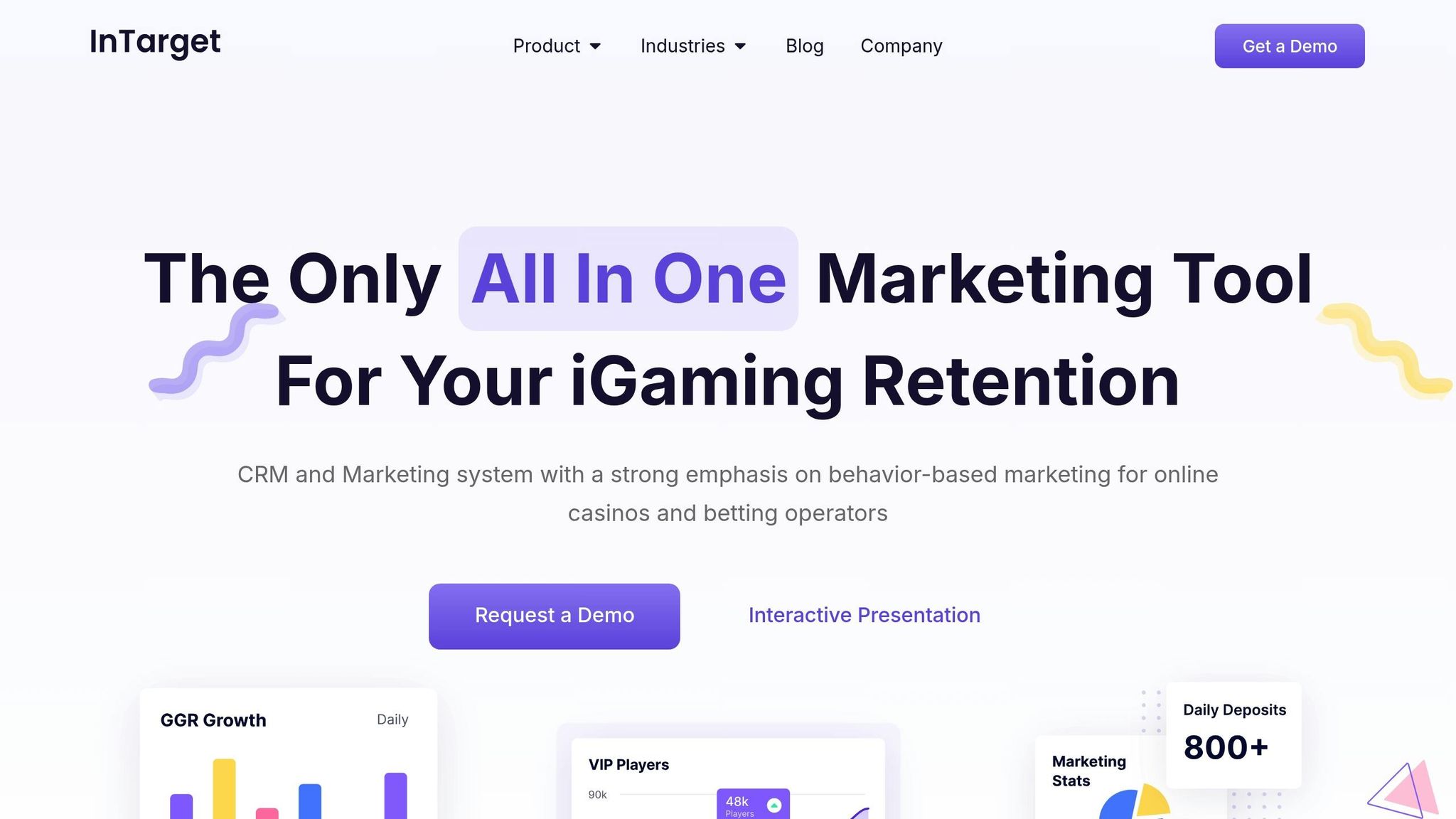
The standout feature of InTarget lies in its focus on simplicity and usability. Unlike many enterprise platforms that demand extensive technical resources, InTarget is designed to be implemented quickly, thanks to pre-built integrations and an intuitive interface that’s easy for marketing teams to navigate.
One of its most compelling features is the built-in AI assistant, which allows users to ask natural language questions like, "Which VIP players haven’t deposited in the last week?" or "How did last weekend’s cashback campaign compare to the previous month?" This functionality provides instant, actionable insights based on real player activity, enabling faster decision-making without the need for technical assistance.
Additionally, InTarget’s rapid integration capabilities mean operators can connect with popular iGaming platforms in just a few days, allowing bonus optimization strategies to kick off almost immediately. Its clear, monthly pricing model also makes it easy for operators to start small and scale up as needed, eliminating the guesswork often associated with enterprise contracts.
Platform Comparison
| Feature | InTarget | Optimove | Fast Track |
|---|---|---|---|
| Target Market | Small to mid-sized operators | Large, multi-brand operations | Enterprise operators with technical teams |
| Setup Time | Days | Several weeks | Extended setup required |
| Technical Requirements | Minimal expertise needed | Dedicated data team required | Technical support required |
| Pricing Model | Transparent monthly plans | Custom enterprise contracts | Custom pricing |
| AI Capabilities | Built-in AI with natural language queries | Enterprise machine learning tools | Advanced analytics requiring setup |
| Integration | Pre-built iGaming integrations | Extensive customization available | Flexible but complex |
| User Interface | Marketing team-friendly | Feature-rich, training needed | Comprehensive but complex |
| Ideal For | Rapid growth focus | Diverse data requirements | Significant technical resources |
The right platform depends on your business goals and resources. Operators with robust technical teams and complex multi-brand needs may find Optimove or Fast Track to be a better fit. However, for those who prioritize quick results, ease of use, and scalability, InTarget offers a streamlined solution that simplifies predictive bonus optimization without compromising on functionality.
Practical Strategies for Predictive Bonus Optimization
Boost engagement and profitability by implementing predictive bonus strategies that use data to personalize offers.
Personalized Welcome Bonuses
Predictive analytics can transform welcome bonuses by tailoring them to individual players based on registration data and early activity. For instance, high-value players might receive premium packages, while casual players are offered simpler yet appealing bonuses at the right time.
By analyzing factors like deposit amounts and game preferences during signup, operators can categorize new players into value segments before they even place their first bet. Instead of presenting the entire bonus package upfront, behavioral triggers can release bonus components strategically. For example, a smaller bonus might encourage a first deposit, while additional rewards are unlocked as players continue engaging with the platform.
This personalized approach ensures that initial offers set the tone for future, adaptive incentives.
Dynamic Reload and Cashback Bonuses
Dynamic bonuses use machine learning to predict player preferences by analyzing data such as game choices, spending patterns, session lengths, and win/loss ratios. This allows operators to move beyond fixed campaigns and deliver bonuses in real time based on each player’s situation.
For example, reload bonuses can be triggered when a player’s balance runs low, and cashback offers can activate during losing streaks to maintain engagement. The terms and amounts of these bonuses are adjusted dynamically based on the player’s predicted lifetime value and risk profile.
Cashback bonuses are particularly effective for players experiencing losses. Predictive models can detect unusual losing patterns and trigger offers to help cushion the impact. This proactive approach keeps players satisfied and reduces the risk of them disengaging entirely.
Brands that use AI for personalized marketing report 5-15% higher revenue and up to 30% better marketing-spend efficiency, highlighting the financial advantages of dynamic bonus systems.
Improving Loyalty Programs
Loyalty programs can also benefit from predictive models, allowing operators to customize rewards and timing for maximum impact. Instead of treating all players the same, these models identify who is most likely to respond to specific incentives and when.
For example, high-value players identified through lifetime value forecasting can be fast-tracked to higher loyalty tiers, receiving enhanced benefits that match their potential. On the other hand, players showing signs of disengagement might receive targeted loyalty bonuses designed to rekindle their interest.
Operators can also use behavioral data to time rewards effectively, such as aligning bonuses with a player’s usual deposit patterns. Predictive models help refine the mix of rewards, whether that’s cash bonuses, free spins, tournament entries, or exclusive access to new games and events.
Reactivation Campaigns for Dormant Players
Most player churn in iGaming is avoidable, making reactivation campaigns a powerful use case for predictive analytics. The key is identifying dormant players early and addressing their specific reasons for disengagement with tailored bonuses.
For instance, players who stopped after a significant loss might respond to cashback offers or risk-free bets, while those who drifted away gradually might be drawn back with free tournament entries or early access to new features.
Instead of relying on a fixed inactivity period, predictive models identify the best intervention window for each player. Some may need immediate outreach, while others might respond better after a longer break.
AI-driven churn prediction can reduce player loss by 18-25%, showing the tangible benefits of data-driven reactivation. Tools like InTarget make these insights accessible, enabling operators to quickly identify opportunities by asking questions like, "Which players haven’t deposited in the last 10 days?"
This targeted approach creates a continuous cycle of engagement and retention.
Responsible Gaming Considerations
While optimizing bonuses, it’s essential to integrate safeguards to encourage responsible gaming. Predictive models can detect risky betting patterns and adjust bonus systems accordingly, such as reducing bonus frequency or temporarily suspending offers for flagged players.
In cases of potential at-risk behavior, operators can implement cooling-off periods, during which players receive educational materials about responsible gambling instead of promotional incentives. This not only supports regulatory compliance but also helps build healthier player relationships.
Measuring Success and Continuous Optimization
Once predictive bonus strategies are in place, it’s crucial to measure their success to keep performance on track and make improvements. This involves monitoring key metrics and using real-time data to tweak campaigns as needed.
Key Performance Metrics
To gauge how well your predictive bonus strategies are working, focus on these metrics:
- Bonus conversion rate: This shows the percentage of players who accept and use bonus offers. It’s a clear indicator of how effective your segmentation and personalization efforts are. Tracking this across various player groups can reveal which segments respond best to specific bonuses.
- Incremental revenue: This measures the additional revenue generated by your bonus campaigns. By comparing revenue from those who received bonuses to a control group that didn’t, you can see the direct impact of your strategy.
- Player lifetime value (LTV): After implementing predictive bonuses, you can better assess LTV. Comparing the lifetime value of players who received customized bonuses versus those who got standard offers highlights the long-term benefits of personalization.
- Retention rate improvements: Personalized, timely bonuses tend to keep players engaged longer than generic offers. Measuring retention at intervals like 7, 30, or 90 days can help you understand both short-term and long-term effects.
- Cost per acquisition (CPA) and return on ad spend (ROAS): These metrics show how efficiently your bonus budget is being used. Predictive models should help lower CPA by targeting players more likely to convert, while better timing and personalization can boost ROAS.
These metrics not only help measure success but also provide a foundation for optimizing campaigns in real time.
Real-Time Campaign Tracking and Insights
Real-time tracking offers instant visibility into key player actions like registrations, deposits, wagers, and churn. This immediate feedback helps operators act quickly to avoid wasted ad spend and make the most of effective strategies.
With tools like InTarget, you can use plain-English queries to uncover actionable insights – such as identifying high-value players who haven’t deposited in a week. This simplifies decision-making and reduces the need for lengthy technical reports.
When real-time data flows directly into your bonus systems, automated campaign adjustments become possible. For example, you can pause underperforming promotions, tweak bonus offers, or reallocate budgets based on live data. These quick adjustments can lead to better conversion rates and stronger ROAS.
Real-time insights also enable large-scale personalization. If a player’s behavior changes – like switching from slots to sports betting – the system can quickly adapt future bonus offers to match their new interests.
Continuous Optimization Using Feedback Loops
Real-time tracking is just the beginning. Feedback loops take optimization a step further by constantly refining your strategies. Every player interaction feeds back into predictive models, improving future campaigns.
Start by tracking every important player action in detail. This granular data helps you understand what works and what doesn’t for different segments, ensuring your adjustments are precise.
Pair this with A/B testing to experiment and validate ideas. Instead of random tests, use predictive insights to design smarter experiments. This approach lets you refine your bonus strategies based on actual performance, making them more effective over time.
Conclusion
Predictive analytics has reshaped the way iGaming operators approach bonus strategies, shifting from generic, cookie-cutter promotions to personalized offers that truly connect with players. By analyzing behavioral data, transaction trends, and real-time activity, operators can now deliver tailored bonuses that hit the mark – at just the right time.
This approach doesn’t just boost engagement; it strengthens player relationships and drives profitability. For example, InTarget clients have reported an impressive 28% average growth in lifetime value (LTV). Personalized bonuses – whether it’s customized welcome offers, cashback based on player behavior, or reactivation perks – have proven to scale engagement effectively. Predictive analytics makes it possible for operators to deliver these tailored experiences efficiently, helping them stay competitive in a crowded market.
"InTarget has become a strategic part of our marketing team to develop personalization at scale, strengthen our player relationships, and drive revenue growth." – Daniel V, Casino Manager
This testimonial highlights the practical advantages of using predictive analytics. But success requires more than just understanding the tools – it’s about execution. Operators need automated real-time segmentation, ongoing feedback systems, and platforms that can scale seamlessly. For smaller operators, solutions offering enterprise-level capabilities without overwhelming complexity can level the playing field, enabling them to stand toe-to-toe with larger competitors.
From dynamic segmentation to real-time personalization, these strategies demonstrate the transformative role data plays in bonus optimization. The future belongs to operators who embrace predictive analytics to craft meaningful, individualized player experiences. Don’t wait – start leveraging predictive analytics now to stay ahead in an industry where data-driven personalization is no longer optional but essential.
FAQs
How does predictive analytics help reduce player churn in the iGaming industry?
Predictive analytics plays a key role in minimizing player churn within the iGaming industry by examining player behavior to spot early signs of disengagement. This insight empowers operators to act swiftly with strategies like tailored bonuses, well-timed reminders, or updated game recommendations, all aimed at keeping players engaged before they decide to leave.
By identifying players most at risk of churning, operators can concentrate their retention strategies where they matter most. AI-powered models have proven highly effective in this area, often boosting retention rates by 18–25%. These tools not only help maintain stronger connections with players but also contribute to maximizing long-term revenue.
Why is InTarget a great choice for small to mid-sized iGaming operators compared to larger, more complex platforms?
InTarget is crafted to cater to the specific needs of small to mid-sized iGaming operators. With its straightforward and user-friendly interface, it eliminates the need for deep technical know-how, making it accessible for teams of all skill levels. Plus, the platform allows operators to roll out marketing campaigns quickly, skipping the lengthy onboarding hassles.
Unlike larger, resource-heavy solutions that demand big budgets and technical expertise, InTarget offers clear pricing and practical tools designed to deliver immediate results. Marketing teams can effortlessly create player segments, launch campaigns, and track their performance. This makes it a smart, budget-friendly option for operators looking to grow their business and maintain a competitive edge in the iGaming world.
How do predictive models keep bonuses relevant as player preferences evolve?
Predictive models play a crucial role in keeping bonuses aligned with player expectations by analyzing data to monitor shifts in preferences and behaviors over time. With the help of AI and machine learning, these models can spot trends, anticipate player needs, and adapt bonus strategies on the fly to ensure offers stay personal and engaging.
By employing methods like dynamic player profiling, behavior-driven triggers, and churn prediction, operators can provide well-timed, customized incentives that match individual playing habits. This approach not only boosts player satisfaction but also strengthens retention and minimizes churn by delivering rewards that genuinely connect with players’ changing interests.