

The onboarding experience in iGaming directly impacts player retention and revenue. A smooth, fast process encourages deposits and long-term loyalty, while overly complex steps drive users away. Here’s what matters most:
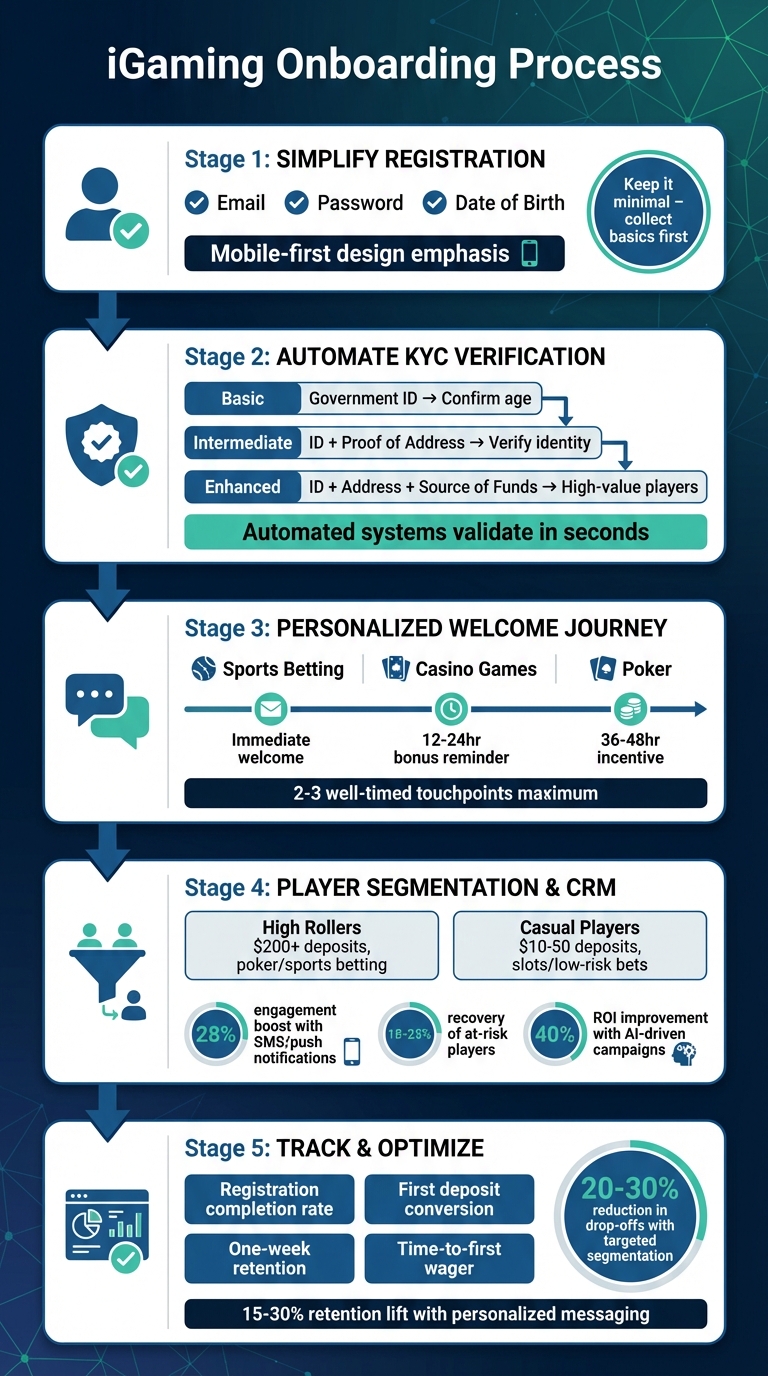
- Simplify Registration: Keep it short – email, password, and date of birth are enough to start. Mobile-friendly design is crucial.
- Automate KYC: Use automated tools to verify low-risk players quickly, while adding extra checks for higher-risk accounts. Offer flexible document upload options.
- Personalized Engagement: Tailor welcome messages based on player interests (e.g., sports betting or poker) and follow up with timely incentives like deposit reminders.
- Use CRM Tools: Platforms like InTarget streamline compliance tracking, automate reminders, and segment players for targeted campaigns.
- Track Metrics: Measure sign-up completion, first deposits, and retention rates to identify and fix drop-off points.
iGaming Player Onboarding Process: From Registration to Retention
Registration and KYC Compliance
Reducing Registration Friction
The registration process is a critical moment. It’s where potential players decide whether to move forward or abandon the sign-up entirely. To keep things simple, start by collecting just the basics: email, password, and date of birth. Additional information can be requested later in the process.
Design plays a huge role here. Use persistent field labels that remain visible even after users start typing. This helps players quickly review their input and avoid errors. If a mistake happens, make sure your error messages are clear and specific – for example, “passport numbers must not contain spaces” is much more helpful than a generic “invalid entry.”
Since most players register on their phones, mobile optimization is non-negotiable. Forms should work seamlessly on smaller screens, with large, easy-to-tap fields and minimal typing required. These user-friendly features naturally flow into automated verification systems, making the entire process smoother.
Automating KYC Verification
Manual verification can cause unnecessary delays. Instead, automated KYC systems can validate players in seconds by analyzing data like email, phone, IP address, and device information. This early screening helps weed out risky signups before they even reach the document upload stage.
For players flagged as low risk, the process should be quick and require minimal checks. On the other hand, any red flags should trigger more thorough verification steps. When it comes to document uploads, offer flexibility: allow file uploads or live photo capture. This approach speeds things up and reduces the chances of players dropping out mid-process.
| Verification Level | Required Documents | Purpose |
|---|---|---|
| Basic | Government ID | To confirm a new player’s age |
| Intermediate | ID + Proof of Address | To verify the identity of active players |
| Enhanced | ID + Address + Source of Funds | For high-value or potentially risky players |
Automated KYC systems can also connect directly with CRM tools to ensure compliance is maintained over time.
Managing Compliance with CRM Tools
CRM platforms, such as InTarget, make compliance management much easier. They automatically track each player’s verification status and keep detailed compliance records. These systems can also segment players by risk level or verification stage. For example, they can send automated reminders when documents need to be updated or reviews are due, ensuring nothing falls through the cracks.
Creating an Automated Welcome Journey
A seamless registration is just the beginning. A thoughtfully designed welcome journey builds trust and keeps players engaged.
Writing Personalized Welcome Messages
The first message a player receives is pivotal – it sets the tone for their entire experience. To make it impactful, segment players based on their interests, like sports betting, casino games, or poker. Why? Because a sports bettor doesn’t need to hear about slot bonuses, and a poker enthusiast won’t care about live dealer games.
Address players by name and refer to their preferences to create a personal connection. Highlight relevant bonuses, region-specific deposit methods, and clear navigation tips for the platform. Tools like InTarget can dynamically insert player data into message templates, giving each communication a tailored feel. The goal? Make players feel valued and informed without overwhelming them.
This level of personalization lays the groundwork for a well-timed engagement strategy.
Setting Up Timed Engagement Campaigns
Timing is everything when it comes to follow-up messages. Start with an immediate welcome, then follow up with a bonus reminder within 12–24 hours. If no deposit happens, send another incentive at the 36–48 hour mark. Each message should focus on providing value while making the process easy, such as offering multiple deposit options.
Avoid overloading players with too many messages. Stick to 2-3 well-timed touchpoints that guide them toward their first deposit without coming across as pushy. Also, consider time zones – messages sent at odd hours are less likely to grab attention. CRM automation tools can handle these campaigns, triggering messages based on player actions (or inaction) to keep communication relevant and timely without manual effort.
Once the initial engagement is underway, offer players additional support through in-game or on-site tutorials.
Adding In-Game or On-Site Tutorials
New players often need guidance, but too much information at once can be overwhelming. Instead, provide tutorials in stages. Start with platform navigation, then introduce game selection, deposit and withdrawal methods, and responsible gambling features as they progress. Visual aids can make these steps easier to understand.
Trigger tutorials automatically based on player behavior. For example, if a player hasn’t made a deposit, prompt them with a guide on deposit methods. If they’re browsing games but not playing, offer a quick-start guide. For actions requiring specific steps, like creating a secure password, use bullet points to break down instructions. Tutorials should be easy to access but not intrusive – players need the freedom to dismiss them while still getting essential information when needed.
Player Segmentation and CRM Automation
Once you’ve streamlined registration and welcome journeys, the next step is targeted segmentation. Why? Because it takes personalization to the next level. By grouping players based on factors like their origin, spending habits, and game preferences, you can create onboarding experiences that resonate. This approach doesn’t just feel more tailored – it can reduce drop-offs by 20–30%.
Let’s explore how categorizing players by their behavior and source can make all the difference.
Segmenting Players by Behavior and Source
Start by looking at acquisition channels. Players who join through affiliates often respond well to bonus-heavy messaging since they’re already primed for promotions. Meanwhile, those who sign up organically tend to appreciate educational content that helps them navigate the platform. To make this work seamlessly, use UTM parameters to tag sources and let your CRM handle the sorting automatically.
Next, distinguish between high rollers and casual players. High rollers, who typically deposit $200 or more upfront, gravitate toward poker or sports betting and usually know their way around. Casual players, on the other hand, deposit smaller amounts – $10 to $50 – favor slots or low-risk bets, and often need a bit more guidance. Use factors like initial deposit size and first-game choice to create these segments.
Using CRM Tools for Dynamic Campaigns
Once you’ve segmented your players, CRM automation tools can help you deliver campaigns that hit the mark. Take InTarget as an example – it automates real-time responses to player actions, like sending SMS reminders or push notifications, which can boost engagement by up to 28%.
What makes this even better is dynamic content. For instance, high rollers might receive exclusive VIP event invites, while casual players are offered tutorials or low-stakes game suggestions. With InTarget’s drag-and-drop automation and built-in A/B testing, you can fine-tune these campaigns, achieving a 15–30% lift in retention when the messaging aligns with player preferences.
AI-Driven Onboarding with InTarget
InTarget’s AI takes things a step further by identifying inactive users within 24–48 hours of registration. It then suggests re-engagement strategies, like personalized SMS offers with free bets, which can recover 18–25% of players at risk of churning. Plus, it evaluates campaign performance in real time, pausing underperforming campaigns (those with less than 5% click-through rates) and recommending tweaks.
For onboarding specifically, the AI customizes both content and timing based on player behavior. For example, U.S. players tend to engage more with evening messages, while high rollers are quicker to respond to exclusive offers. This predictive, data-driven approach can improve ROI by 40%, allowing operators to fine-tune their efforts without relying on guesswork.
Tracking Onboarding Performance
Once you’ve segmented players and automated campaigns, the next step is to measure how well the onboarding process performs. Without keeping an eye on the right metrics, it’s easy to overlook where players are disengaging. The goal? Identify where players are actively engaging, where they drop off, and how to smooth out any rough patches in the onboarding journey.
Metrics to Track
Detailed tracking builds on your automated segmentation efforts, helping you understand what’s working and what isn’t. Focus on key metrics like:
- Registration completion rate: How many players finish signing up?
- First deposit conversion: How many players make their first deposit?
- One-week retention: Are players sticking around after the first week?
- Time-to-first wager: How long does it take for players to place their first bet?
These metrics provide a clear picture of how effectively your onboarding process is performing.
Finding Drop-Off Points
Tools like GA4 and Mixpanel can help you track player behavior at each step of the onboarding flow. Pay close attention to critical navigation paths, such as moving from the lobby to gameplay, visiting the cashier, and exiting the platform. If you notice players dropping out during specific steps – like KYC (Know Your Customer) verification – it’s a sign that part of the process needs attention.
One potential fix is applying selective friction. For low-risk users, make the process as seamless as possible. For high-risk sign-ups, add extra verification steps to maintain security without creating unnecessary barriers for everyone.
Don’t forget to monitor failed payment attempts. Automating real-time responses through your CRM – such as sending support messages or suggesting alternative payment methods – can help recover players who might otherwise abandon the process. These insights allow you to make quick adjustments that improve conversion rates.
Using Data to Improve Onboarding
Data is your best tool for refining the onboarding journey. CRM analytics can highlight weak spots, helping you make targeted improvements. For example, if you notice a drop in engagement after registration, you could use SMS reminders offering deposit bonuses to re-engage players.
A/B testing is another powerful way to optimize the experience. Experiment with different welcome email subject lines, bonus structures, or tutorial formats. Even small changes – like tweaking the color of a call-to-action button or simplifying a form – can lead to noticeable improvements. Let real player data guide these updates to ensure every adjustment brings you closer to a seamless onboarding experience.
Conclusion
Creating a smooth iGaming onboarding process hinges on three key pillars: automation, personalization, and data analysis. Simplifying steps like registration and KYC verification minimizes the friction that often leads to player drop-offs. The goal? Keep the process fast and hassle-free. From there, automated welcome campaigns and personalized messages help keep new players engaged right from the start.
Once automation and personalization are in place, player segmentation takes things to the next level. By tailoring messages – whether it’s a bonus offer or a quick tutorial – to specific behaviors, you can significantly boost first-deposit conversions and improve retention rates.
To fine-tune your strategy, keep an eye on metrics like registration completion rates, first-deposit conversions, one-week retention, and time-to-first wager. These numbers can guide adjustments through A/B testing and refining your messaging.
For smaller and mid-sized casinos or sportsbooks, platforms like InTarget offer a practical way to implement these strategies without the steep costs of enterprise tools. Features like automated email, SMS, and push notifications, combined with an AI assistant that can answer questions like "Which players haven’t deposited in the last 10 days?" in real time, make it easier to launch effective campaigns and boost retention.
Fast, customized onboarding isn’t just about making a great first impression – it’s about turning initial engagement into long-term loyalty and value.
FAQs
How does automating KYC streamline player onboarding in iGaming?
Automating Know Your Customer (KYC) processes streamlines player onboarding by verifying user identities both quickly and precisely. This not only cuts down on manual errors but also strengthens fraud prevention measures and ensures compliance with regulatory requirements.
By speeding up verification, players gain access to your platform faster, leading to a smoother and more enjoyable registration experience. On top of that, automation allows operators to uphold strong security standards without causing unnecessary delays.
How does player segmentation improve retention in iGaming?
Player segmentation helps keep players engaged by categorizing them based on their actions and preferences – like the types of games they enjoy, their betting habits, or where they are in their customer journey. This approach enables operators to craft marketing strategies that feel more personal and relevant to each group.
With targeted promotions, customized rewards, and tailored communication, operators can enhance player engagement, build loyalty, and improve overall lifetime value. Segmentation ensures players get messages that matter to them at the right time, creating a more enjoyable and meaningful gaming experience.
How does a CRM like InTarget enhance the player experience in iGaming?
CRM tools like InTarget take player engagement to the next level by using player data to craft personalized interactions. They fine-tune messages, offers, and communication channels – like email, SMS, or push notifications – to align with each player’s unique preferences and behaviors.
This kind of tailored approach keeps players more engaged and encourages them to stick around longer. For instance, operators can send promotions that match a player’s interests, reactivation campaigns to bring lapsed players back, or loyalty rewards based on activity. The result? A more enjoyable and rewarding experience for every player.