

The iGaming market is growing fast, but competition is fierce. Operators need smarter tools to attract and keep players. That’s where CRM systems come in. These tools use data to create detailed player profiles, enabling personalized campaigns and automated marketing. The results? Higher conversion rates, better retention, and smarter spending on promotions.
Key Takeaways:
- Market Growth: The US iGaming market is projected to reach $24.3 billion by 2028.
- CRM Benefits:
- Personalized emails can boost conversions by 6x.
- Advanced CRM users see 30% higher player retention.
- How It Works:
- Tracks player behavior in real-time.
- Automates campaigns across email, SMS, and push notifications.
- Personalizes offers based on habits and preferences.
- Results: Casinos using CRM report increased lifetime value, better engagement, and reduced churn.
CRMs are essential for operators aiming to thrive in a competitive market. By leveraging player data, they deliver targeted messages that convert prospects into loyal players.
How CRM Systems Improve Player Acquisition
Modern CRM systems have transformed from simple contact databases into powerful marketing tools. These systems gather data from every interaction a player has with a platform – whether it’s through registration forms, gameplay activity, payment transactions, or marketing campaigns. The result? A unified player profile that provides deep insights into player behavior and preferences.
One of the standout features is real-time data ingestion, which keeps marketing teams updated on player actions as they happen. For instance, if a player registers but doesn’t make their first deposit, the CRM system can flag this behavior immediately and trigger a targeted campaign within minutes. This level of responsiveness helps operators act quickly, creating opportunities for more effective player engagement.
Data Management for Precision Targeting
CRM systems bring together data from various sources – registrations, gameplay, payments, and support interactions – into one centralized profile. By consolidating information from gaming platforms, payment processors, customer service tickets, and marketing channels, operators gain a comprehensive view of not just what players do, but also when and why they do it.
Through advanced segmentation, this data is used to divide players into highly specific groups. Instead of sending the same welcome offer to everyone, operators can tailor messages based on factors like spending habits, game preferences, location, and engagement levels. For example, a player who registers in the evening and enjoys slot games might receive a different message than someone signing up for sports betting during a major tournament.
But segmentation doesn’t stop at surface-level demographics. CRM systems dig deeper, analyzing betting habits, game choices, deposit frequency, and even preferred devices. This granular data helps operators uncover hidden opportunities, such as identifying casual players who make small but consistent deposits and have high lifetime value, or weekend players who respond best to Friday promotions.
Dynamic offers and bonuses are another game-changer. These adjust in real time based on player behavior. For instance, a player who hasn’t logged in for several days might get a reactivation offer, while a regular player who hasn’t deposited recently could receive a bonus tailored to encourage their next deposit. This kind of behavioral targeting ensures that offers are timely and relevant, increasing the chances of conversion.
Automated Marketing Campaigns
CRM systems streamline the process of converting new players into active participants through automation. With "Marketing Autopilot" capabilities, these platforms handle complex, multi-step campaigns without requiring constant oversight from marketing teams.
Automated campaigns can run across multiple channels, including email, SMS, and push notifications. For example, a player might receive a welcome email immediately after registering, followed by an SMS reminder about an unclaimed bonus 24 hours later, and then a push notification for a time-sensitive promotion when they open the app.
Trigger-based marketing ensures messages reach players at the perfect moment. Whether it’s congratulating a player for reaching a new level, celebrating their first deposit, or acknowledging a milestone, the CRM sends out relevant messages automatically. This well-timed communication keeps players engaged and increases the likelihood of further activity.
The automation also extends to lifecycle marketing, guiding players from their initial registration through their early gaming experiences. New players might receive educational emails about how to navigate the platform, while those showing interest in specific games get targeted updates about tournaments or exclusive events.
With over 50,000 campaigns launched through automated CRM platforms, the scale of these systems is undeniable. Beyond saving time, automation ensures consistent messaging and eliminates the risk of missed opportunities, which can happen when marketing teams manually manage large-scale communications.
Personalized Messages for Better Results
Personalization is where CRM systems truly shine, turning generic marketing efforts into tailored experiences that resonate with individual players. Using machine learning and data analysis, CRM software identifies patterns that might go unnoticed by humans. For example, some players might respond best to bonus offers on weekends, while others prefer free spins during their lunch break on weekdays. These insights help optimize the timing and content of messages for maximum impact.
Personalization doesn’t just stop at timing – it extends to the content and delivery channel. High-value players might receive exclusive VIP invitations, while new players are sent step-by-step guides to make their first deposit. Slot enthusiasts are shown promotions for new game releases, while sports bettors are alerted about upcoming matches and enhanced odds.
Real-time personalization takes things a step further. If a player is browsing slot games but hasn’t started playing, the CRM might trigger a popup offering free spins for the game they’re viewing. This kind of immediate response creates a seamless, engaging experience that feels less like marketing and more like helpful guidance.
The results of personalization are clear. Operators have seen that customized bonuses, exclusive offers, and milestone acknowledgments help build stronger emotional connections between players and brands. These connections not only improve player acquisition rates but also boost long-term loyalty and value.
Key CRM Features for Casino Marketing
When it comes to driving growth in casino marketing, a CRM system equipped with real-time tracking, multi-channel outreach, and insightful analytics can be a game changer. These tools not only streamline operations but also enhance player acquisition by leveraging data-driven strategies. The best CRMs combine these features to create a continuous, automated system that works tirelessly to attract and retain players.
Here’s a closer look at the key CRM features that make targeted casino marketing more effective:
Real-Time Tracking and Dynamic Player Segments
Timing is everything in casino marketing, and real-time tracking ensures you never miss an opportunity. With CRM systems, you can monitor player behavior as it happens – tracking transactions, gameplay (like spin counts and win amounts), login activity, and even traffic sources. This gives you a clear picture of each player’s journey and allows for quick, informed responses.
What takes this to the next level is automated segmentation. Instead of manually grouping players, advanced CRMs use predefined rules to create dynamic segments that update automatically. For example, you can set up a segment for new players who registered in the last 48 hours but haven’t made a deposit yet, or for high-value players who’ve been inactive for several days.
"Create automated segments in just several clicks. Add or remove players automatically when they match the rules you choose."
- InTarget
This automation ensures your marketing campaigns always target the right audience. Say a new player signs up but doesn’t deposit within 24 hours – your CRM can automatically place them in a “first deposit encouragement” segment and send tailored offers to convert them into active players.
Trigger-based marketing adds another layer of precision. For instance, if a player is browsing slot games but hasn’t made any moves, the system can instantly deliver a personalized bonus offer. This kind of real-time engagement would be nearly impossible to achieve manually.
The results speak for themselves: casinos using behavior-based marketing with real-time tracking and segmentation have reported a 28% increase in player lifetime value.
Multi-Channel Communication for Maximum Reach
To effectively acquire and engage players, you need to meet them where they are – and that means using multiple communication channels. Modern CRM platforms integrate email, SMS, push notifications, and in-app messaging into cohesive campaigns that maintain consistent contact across all touchpoints.
- Email Marketing: A reliable tool for building long-term relationships and nurturing player engagement.
- SMS Marketing: Perfect for delivering time-sensitive offers directly to players’ phones.
- Push Notifications: Great for re-engaging players when they’re already active on mobile devices.
The beauty of a multi-channel approach is its flexibility. By tailoring messages to each player’s preferred channel, you increase the likelihood of making meaningful connections. For instance, some players may respond better to in-app messages, while others might prefer the immediacy of SMS.
Webhooks add yet another layer of sophistication. These allow for real-time, personalized actions triggered by player behavior. For example, when a player makes their first deposit, a webhook can instantly send bonus credits, a congratulatory message, and guidance on what to do next – all within seconds.
Analytics and Performance Reports
Even the most advanced CRM features lose their edge without proper measurement. Analytics turn raw campaign data into actionable insights, helping operators refine their strategies for better results.
Casino-focused CRMs go beyond basic metrics like email open rates or click-through rates. They track key indicators such as first-time deposits, player lifetime value, churn rates, and revenue attribution. This level of detail helps you identify not just which campaigns bring in sign-ups, but which ones create loyal, high-value players.
"This feature isn’t just about tracking; it’s about empowering your decision-making with real-time data on the profitability of your communications."
- InTarget
Real-time reporting allows marketing teams to adjust strategies on the fly. For example, if a bonus offer is performing exceptionally well with weekend players, you can scale it up or apply similar tactics to other segments. On the flip side, underperforming campaigns can be paused or reworked before they waste resources.
AI-powered analytics take this a step further by uncovering patterns that might escape human observation. Predictive tools can identify new players who are most likely to make their first deposit, enabling you to focus your efforts on those with the highest potential.
By combining detailed tracking, multi-channel communication, and advanced analytics, CRMs create a feedback loop that continuously improves acquisition efforts. Operators can experiment, measure outcomes, and fine-tune their strategies based on solid data – not guesswork.
For smaller operators looking for enterprise-level tools without the complexity, platforms like InTarget offer these essential features in a user-friendly package tailored for iGaming. With an AI assistant that responds to plain-English queries like, “Which players haven’t deposited in the last 10 days?”, even teams with limited resources can make data-driven decisions quickly and effectively.
Step-by-Step Guide to Using CRM for Player Acquisition
Looking to make player acquisition seamless and effective? Here’s how to use CRM to integrate, segment, automate, and fine-tune your efforts for better results in the casino world.
Connecting CRM with Casino Platforms
The first step is to bring all your core systems – gaming, payment, and marketing – into your CRM. This gives you a centralized view of your players and their activity.
Start by linking your core gaming platform to your CRM. This connection captures key player data, like transaction history, gameplay stats (e.g., spin counts and win amounts), and login details, including traffic sources. With this, you’ll have a full picture of each player’s journey – from their first registration to their most recent session.
Next, integrate your payment gateway to track financial transactions, including deposits, withdrawals, bonuses, and even failed payments. This data allows for real-time responses, like sending a support message after a failed deposit or offering a bonus after a big win.
Finally, connect your marketing tools – email, SMS, and push notification platforms – to your CRM. This creates a feedback loop, enabling you to see which messages players open, click, or ignore. Pre-built connectors can make these integrations faster and more reliable, saving time and effort on development.
Once your data is centralized, the next step is to organize it into actionable player groups.
Creating Player Groups for Targeted Campaigns
Segmentation is where the magic happens. By grouping players based on behavior and transaction data, you can tailor your campaigns to resonate with specific audiences.
Start with behavioral segmentation. Group players by how often they play – daily, on weekends, or occasionally. Each group will respond differently to offers, so this helps you craft messaging that speaks to their habits.
Then, move to transactional segmentation. Divide players by their deposit sizes, withdrawal patterns, and overall lifetime value. High rollers might appreciate VIP perks and exclusive bonuses, while smaller depositors may prefer percentage-based rewards.
For even greater precision, use dynamic segmentation. This allows player groups to update automatically based on changes in behavior. For instance, a "New Players – No Deposit" group could include anyone who registers but hasn’t deposited within 48 hours. Once they make their first deposit, they’d automatically shift to a "New Players – First Deposit" group with offers tailored to encourage further engagement.
Some operators go a step further with predictive segmentation, identifying players likely to churn or increase activity. This enables you to launch proactive campaigns to retain or engage them before it’s too late.
Setting Up Automated Acquisition Campaigns
With your segments ready, you can roll out automated campaigns that run 24/7, responding to player actions in real time. Here are a few examples of trigger-based sequences:
- Welcome sequences: Upon registration, send a series of messages over several days, including account verification, game recommendations, and new player bonuses.
- Reactivation offers: After 7, 14, or 30 days of inactivity, escalate incentives to win back dormant players.
- Milestone celebrations: Automatically reward players for achievements like their first deposit, weekly gameplay, or exploring a new game.
To maximize impact, coordinate these campaigns across multiple channels. For instance, you could email a player about an upcoming tournament, follow up with an SMS reminder, and send a push notification when the event begins. Each touchpoint reinforces the message while respecting the player’s preferred communication methods.
In 2024, a leading U.S. online casino used a CRM-driven segmentation strategy to group players by deposit frequency and game preferences. Over six months, their targeted campaigns boosted new player conversions by 22% and cut churn by 14%.
For even better results, let AI take your campaigns to the next level.
Using AI for Better Acquisition Results
AI tools can uncover patterns in player data that humans might miss, helping you predict behavior and optimize campaigns.
Predictive analytics can score new players based on how likely they are to make their first deposit. By analyzing factors like registration time, device type, traffic source, and browsing behavior, AI helps you focus your best offers on those most likely to convert.
Churn prediction is another game-changer. AI can flag players at risk of leaving by analyzing session frequency, bet sizes, win/loss patterns, and engagement with communications. This gives you time to intervene with personalized retention efforts.
Campaign optimization happens in real time as AI tests different message timings, offers, and channels for each segment. It learns what works best and adjusts automatically to drive better results.
"Ask your questions in plain English and receive instant answers – no technical barrier, no middleman." – InTarget
In January 2025, an iGaming operator used AI-powered CRM tools to identify at-risk players and send tailored reactivation offers. The result? A 12% drop in player attrition and a 19% increase in reactivated deposits within just three months.
CRM Platform Comparison for iGaming Operators
When it comes to player acquisition in the iGaming industry, choosing the right CRM platform can make all the difference. With so many options on the market, it’s important to identify the platforms that align with your operational goals, budget, and technical needs. Among the leading solutions, InTarget, Optimove, and Fast Track stand out for their ability to deliver results tailored to the iGaming sector.
Each platform takes a unique approach – some prioritize advanced features for large enterprises, while others focus on simplicity and speed for smaller operators. Understanding these distinctions is key to finding the right fit for your business.
CRM Platform Comparison Chart
Here’s a quick look at how these platforms differ in terms of features, pricing, and suitability:
| Platform | Target Operator Size | Key Features | Onboarding Speed | Pricing Model | US Market Suitability |
|---|---|---|---|---|---|
| InTarget | Small to Mid-sized | Email, SMS, Push Notifications, AI Assistant, Lifecycle Automation, iGaming-specific Segmentation | Fast (1-2 weeks) | Subscription-based starting at $299/month | High – US compliance ready |
| Optimove | Mid to Large | AI-driven Personalization, Predictive Analytics, Advanced Customer Journey Mapping, Churn Prediction | Moderate (2-4 weeks) | Custom pricing starting at $1,000/month | High – Enterprise compliance |
| Fast Track | Small to Mid-sized | Real-time Player Data, Flexible Segmentation, Multi-channel Automation | Fast (1-2 weeks) | Usage-based starting at $199/month | High – Scalable compliance |
What Sets These Platforms Apart?
Each platform brings unique strengths to the table. InTarget has a proven track record, with over 50,000 campaigns launched and a 97% customer support satisfaction rate, making it a dependable choice for operators focused on performance. Optimove, on the other hand, excels in handling complex data and is ideal for operators managing multiple brands or large player bases. Meanwhile, Fast Track provides a balance of cost-effectiveness and functionality, appealing to operators who want robust tools without breaking the bank.
According to reports from iGaming Business (2024), advanced CRM platforms can boost player retention by up to 30% and cut churn rates by 25%. Additionally, a survey by iGaming Express (2025) revealed that 78% of operators see CRM integration as a top priority, although many struggle with lengthy and complex implementations.
Why InTarget Stands Out for Smaller Operators
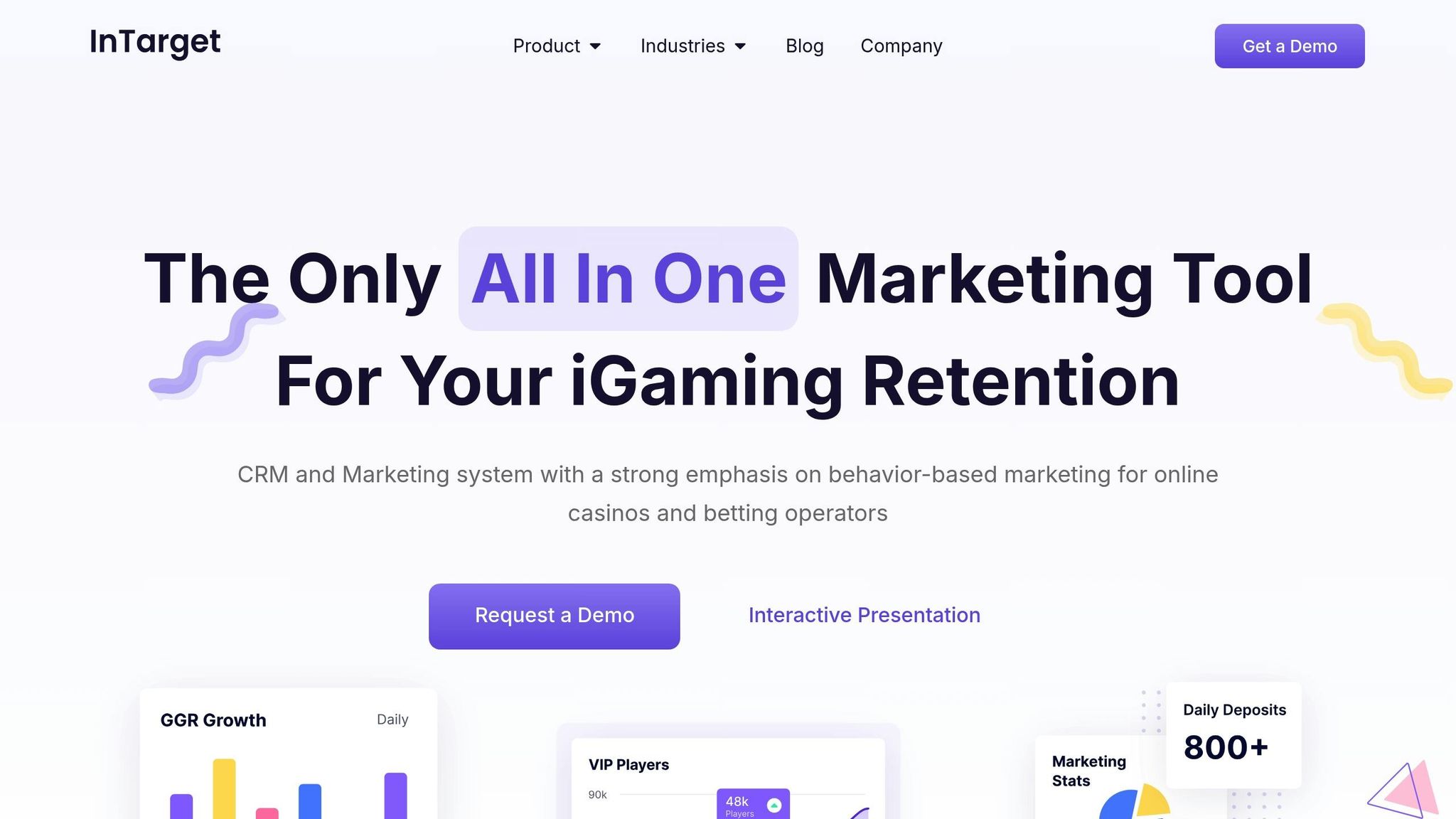
Small and mid-sized operators often face challenges that larger, enterprise-focused platforms fail to address. They need solutions that are easy to implement, budget-friendly, and tailored to iGaming-specific needs. That’s where InTarget shines.
Unlike generic CRMs that require heavy customization, InTarget is built for iGaming. Its pre-built segments – like "First Deposit Within 24 Hours" or "Weekend High Rollers" – are designed to meet real-world casino marketing needs. This eliminates much of the trial-and-error process and drastically reduces setup time.
Speed of onboarding is another area where InTarget excels. While competitors like Optimove and Fast Track may require weeks to implement, InTarget’s "Marketing Autopilot In Minutes" approach lets operators launch campaigns in just days. For smaller operators, this quick start can be a game-changer, minimizing downtime and maximizing efficiency.
The platform’s AI Assistant further simplifies operations by making data analysis accessible to everyone. Marketing teams can ask plain-English questions – like "Which players haven’t deposited in the last 10 days?" – and receive instant, actionable insights. This eliminates the need to wait for data analysts or developers, empowering teams to act quickly.
Affordability is another major advantage. While Optimove’s custom pricing starts at over $1,000 per month, InTarget offers a clear, subscription-based model starting at $299/month. This predictable pricing allows smaller operators to plan their budgets more effectively while scaling as they grow.
Here’s an example: A small online casino in the US used InTarget to implement automated welcome campaigns and preference-based player segmentation. Within three months, they saw a 25% increase in first-time deposits and cut their onboarding time by 15%.
"InTarget makes it easy for us to send messages that make money." – Daniel V, Casino Manager
InTarget’s clients report an average lifetime value growth of 28%, proving that a user-friendly solution can still deliver powerful results. For operators who want big capabilities without the complexity, InTarget is a clear winner.
Conclusion: How CRM Improves Player Acquisition Results
CRM systems have reshaped how casinos approach player acquisition, shifting from broad, one-size-fits-all marketing to targeted, data-driven strategies that deliver measurable outcomes. By combining data management, automation, and personalization, these systems help operators reach and convert more players while improving efficiency.
Centralized data management serves as the backbone of effective CRM strategies. By gathering and organizing player data from various touchpoints, operators can build detailed player profiles and execute precise targeting. This unified approach not only simplifies campaign management but also ensures that outreach efforts are timely and relevant.
Marketing automation eliminates the need for manual processes in acquisition campaigns. Automated workflows, such as welcome sequences, trigger-based offers, and lifecycle campaigns, ensure that prospects receive tailored communications at the right moment. For operators aiming to expand their player base, this scalability is invaluable.
Personalization sets CRM-driven acquisition apart from traditional methods. By delivering customized offers and tailored welcome messages, operators can foster stronger connections with new players. When combined with robust automation and data insights, personalization enhances every interaction, from the first touchpoint to conversion.
The results speak for themselves. CRM-powered acquisition strategies consistently outperform traditional marketing, with operators reporting higher conversion rates, increased first-time deposits, and longer player lifetimes. For instance, InTarget’s clients have seen an average lifetime value growth of 28%, showcasing the tangible benefits of iGaming-specific CRM solutions.
For smaller and mid-sized operators, platforms like InTarget provide a practical alternative to complex, enterprise-level systems. These solutions are tailored to meet the unique needs of iGaming businesses, offering quick setup, transparent pricing, and features designed specifically for the industry. This makes advanced CRM tools accessible without requiring extensive technical expertise.
By combining data insights, automation, and personalized messaging, CRM systems give operators a clear edge. Those who adopt these tools can identify and convert high-value players more effectively, while traditional marketing approaches often lead to higher costs and lower success rates.
As the iGaming landscape continues to grow, CRM systems will remain a cornerstone of sustainable player acquisition and retention strategies. Investing in the right CRM platform ensures long-term growth and stronger connections with players.
FAQs
How can a CRM system boost player retention in online casinos?
A CRM system plays a key role in keeping players engaged by enabling personalized, behavior-driven marketing. With its tools, operators can easily segment users, automate campaigns, and monitor performance, making it easier to respond promptly to player activity.
For instance, a CRM can pinpoint players who haven’t made a deposit recently and send them re-engagement offers. It can also reward loyal players with customized promotions, boosting both retention and revenue. Acting as a central hub for data and campaigns, a CRM ensures marketing efforts are not only efficient but also tailored to meet players’ unique preferences.
What challenges do smaller iGaming operators face with CRM systems, and how can they address them?
Smaller iGaming operators often face hurdles like complex setups, drawn-out onboarding, and steep costs when implementing CRM systems. These obstacles can make running successful marketing campaigns feel like an uphill battle.
To overcome these challenges, operators can opt for platforms built with simplicity in mind. Some solutions provide features like clear pricing, user-friendly interfaces, and fast integration, enabling teams to hit the ground running without needing hefty budgets or advanced technical skills. This lets operators focus their energy on what truly matters – attracting and keeping players engaged.
How can AI-powered CRM tools enhance player acquisition and retention for online casinos?
AI-driven CRM tools, such as InTarget, simplify the process for online casinos to both attract new players and keep existing ones engaged. These tools analyze complex data and transform it into practical insights. For instance, they can pinpoint players who haven’t made a deposit in the last 10 days or evaluate the performance of recent marketing campaigns, allowing operators to adjust their strategies on the fly.
By automating repetitive tasks and delivering personalized outreach, these tools help casinos connect with players in a more meaningful way. Whether it’s through customized promotions, reactivation efforts, or well-timed incentives, AI tools enhance player engagement. The result? Stronger acquisition strategies and improved player loyalty over time.