

Most casinos and sportsbooks fail by sending generic promotions to all players. Lifecycle marketing changes that by personalizing offers, timing, and messages based on player activity. This data-driven approach improves retention, reduces churn, and maximizes lifetime value (LTV).
Key Takeaways:
- What it is: Tailored campaigns based on a player’s journey (e.g., onboarding, active play, inactivity).
- Why it works: Player activity data (e.g., deposits, game preferences, session patterns) enables segmentation and targeted offers.
- How it’s done: Automated workflows trigger campaigns for specific actions like sign-ups, deposits, or inactivity.
- Tools like InTarget: Affordable platforms with AI-driven insights make lifecycle marketing accessible for small to mid-sized operators.
Lifecycle marketing ensures players receive relevant, timely incentives, turning one-size-fits-all promotions into effective, behavior-specific engagements.
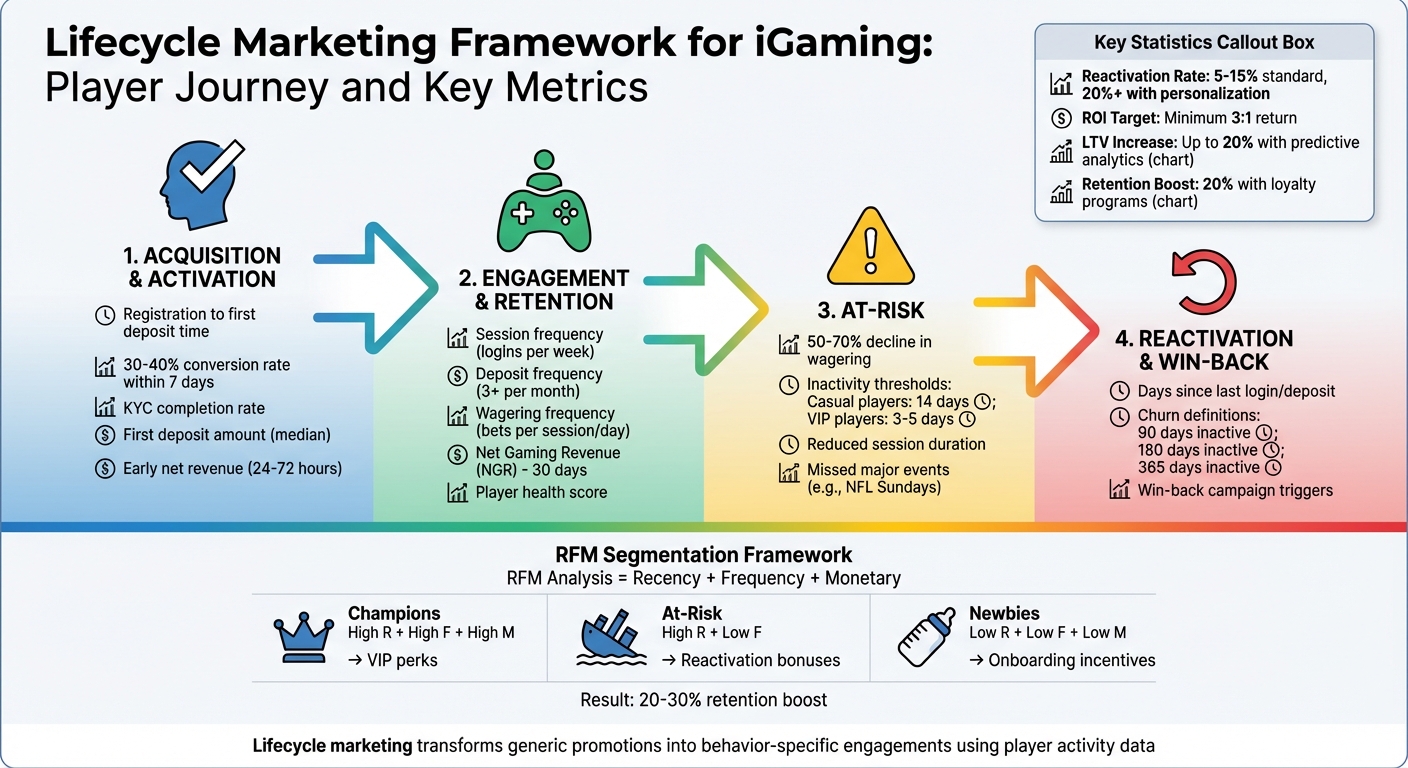
Lifecycle Marketing Stages and Key Metrics for iGaming Operators
Player Activity Metrics by Lifecycle Stage
Tracking player activity metrics at different lifecycle stages is crucial for designing campaigns that hit the mark. These metrics let you tailor your approach to each player’s status – whether they’re a brand-new sign-up, a regular user, or someone drifting away. Instead of treating everyone the same, you can fine-tune your messaging based on where a player stands. For instance, you might focus on onboarding a first-time depositor, keeping a weekly player engaged, or reactivating someone who hasn’t logged in for weeks. This targeted approach ensures your campaigns are both relevant and effective.
Acquisition and Activation Metrics
When it comes to new players, the goal is simple: get them started quickly and smoothly. Pay attention to where they’re coming from – track registration time and source (affiliate, paid search, or organic). Monitor KYC (Know Your Customer) completion to spot any pain points in the verification process. Another key metric is the time between registration and the first deposit. On average, operators convert 30–40% of registrations into first-time depositors within seven days. Dig into details like the initial deposit amount (median-based), how soon after depositing they place their first bet, and early net revenue within the first 24 to 72 hours. If you notice drop-offs – whether it’s between signing up and depositing or between depositing and betting – it might signal issues like confusing payment options or unclear bonus offers.
Once players are onboarded, the focus shifts to keeping them engaged and active.
Engagement and Retention Metrics
For active players, engagement is everything. Metrics like session frequency (logins per week), session duration (average time spent per visit), and deposit frequency (three or more deposits per month) provide a clear picture of activity levels. Wagering frequency – whether measured by bets per session or per day – offers additional insight into player habits. It’s also helpful to track preferences, such as whether a player leans toward slots, live dealer games, or NFL betting. Aligning promotions with these preferences can boost their lifetime value.
Other important indicators include net gaming revenue (NGR) over the past 30 days, bonus usage, and VIP tier status. Combining these metrics into a simple player health score can be a game changer. For example, you could award points for logging in three times a week or making multiple deposits per month, while deducting points for inactivity. This scoring system helps categorize players into groups like "healthy", "watch-list", or "at-risk", enabling you to trigger campaigns that suit their current status.
Reactivation and Win-Back Metrics
When players stop logging in or depositing, it’s time to focus on reactivation. Key metrics here include the number of days since the last login or deposit and significant drops in wagering activity – like a 50–70% decline in total stakes compared to the previous 30 days. Set clear inactivity thresholds: for example, a casual player who logs in weekly might be flagged after 14 days of silence, while a high-value VIP might trigger an alert after just three to five days.
Churned players are typically defined by longer periods of inactivity – 90, 180, or even 365 days, depending on your product and the cost of reactivation efforts. For sportsbook players, inactivity around major events like NFL Sundays can be a red flag. Missing such events could signal churn, especially for players who usually bet during those times. Dynamic thresholds can automatically kick off win-back campaigns as soon as inactivity patterns are detected, giving you a better chance to re-engage them before they’re gone for good.
Player Segmentation Using Activity Data
Once you’ve gathered lifecycle metrics, the next step is segmentation – turning raw data into targeted strategies. By grouping players based on their behavior and value, you can craft campaigns that resonate. For instance, you might focus on high-value VIPs who merit special attention or dormant players who need a reason to return. The goal is simple: deliver messages that align with each player’s activity and preferences.
Behavioral Segmentation Methods
RFM Analysis is a powerful way to segment players by focusing on three key factors: Recency (how long it’s been since their last deposit or session), Frequency (how often they engage within a specific timeframe), and Monetary value (their total deposits or overall lifetime value). By scoring players in these categories, you can create segments like:
- Champions: Players with high scores across all three metrics, perfect for VIP perks and exclusive offers.
- At-Risk: Those with recent activity but low frequency, ideal for reactivation bonuses.
- Newbies: Players with low scores in all areas, making them great candidates for onboarding incentives.
Using RFM analysis effectively can lead to a retention boost of 20–30%, according to industry benchmarks.
Event-based grouping, on the other hand, focuses on specific actions players take. Examples include completing a first deposit, hitting session milestones, showing a preference for particular games (like slots or sports betting), or becoming inactive (e.g., no login in 7–28 days). For instance, you could identify "High Rollers" as players who wager more than $500 per session and invite them to exclusive tournaments. Similarly, flagging "Dormant" players – those inactive for 90+ days – and sending them win-back offers like free spins can reignite their interest. This method also works well for cross-selling. For example, if someone bets heavily on soccer, you could suggest related markets like football betting.
For even greater precision, combine RFM analysis with event-based triggers to create hybrid segments. For instance, a player with high recency and frequency but low monetary value could be a target for upsell campaigns. Meanwhile, a high-spending player with declining frequency might need a retention-focused strategy. Regularly updating these segments through A/B testing and key performance indicators (KPIs) ensures your targeting remains sharp. As your player base grows, CRM automation can help manage these segments efficiently.
Using CRM Tools for Segmentation
As your audience expands, CRM tools can take over the heavy lifting of segmentation. Platforms like InTarget streamline the process by analyzing real-time activity data and dynamically creating player groups without manual effort. For example, InTarget can automatically identify players who haven’t made a deposit in 10 days and trigger reactivation campaigns via email, SMS, or push notifications.
What sets InTarget apart is its AI-driven insights tailored specifically for iGaming. Marketers can pose natural-language queries like “Which players haven’t deposited in the last 10 days?” or “What were the top 10 games by player count last week?” and receive instant, actionable answers – no need for data analysts or developers to generate reports.
InTarget also consolidates data into Rich User Profiles, offering a detailed timeline of each player’s interactions. This includes everything from their first spin to their most recent withdrawal, along with transaction history, game preferences (e.g., spin counts and win amounts), and communication records. With this 360° view, you can quickly identify trends and refine your segmentation approach in real time.
To keep campaigns relevant as player behavior shifts, InTarget uses over 50 advanced event triggers – like registration, deposits, and gameplay milestones – to move players between segments dynamically. For small to mid-sized operators, InTarget is particularly appealing due to its quick setup (just one week compared to the 3–6 months required by enterprise platforms like Optimove or Fast Track) and its pricing, which starts at $750 per month – far more accessible than the $5,000+ typically charged by larger platforms.
Building Trigger-Based Campaigns
Trigger-based campaigns take targeted segmentation to the next level by ensuring each player receives timely, personalized communication. These campaigns automate outreach based on specific player actions, eliminating manual effort while keeping your messaging relevant and well-timed.
Lifecycle Event Triggers
Trigger campaigns are designed to respond to key moments in a player’s journey. For example, if a new registrant doesn’t make a deposit within 24 hours, you can send an onboarding email. Follow this up with a push notification two hours after app installation and an SMS 24 hours later outlining deposit options in USD. When a player makes their first deposit, confirm the transaction immediately and guide them toward games or markets that align with their preferences – like highlighting sports betting for NJ players or showcasing popular slot games for others.
Inactivity triggers are especially useful for re-engaging dormant players. For those inactive for 7–28 days, you might send reminders offering incentives like free spins or a $5 free bet. Between 28–90 days, consider cashback offers with clear wagering terms. For players inactive for 90–180 days, focus on high-value segments with more enticing offers, such as a $20 risk-free NFL bet plus 20 free spins. Beyond 180 days, shift to brand reminders tied to major events like the Super Bowl or March Madness, saving premium offers for VIPs.
Milestone and behavioral triggers help keep active players engaged. For instance, if someone hits a deposit milestone or completes their first parlay, send loyalty rewards or progression updates. Celebrate big wins with congratulatory messages and suggest trying a new game. After a notable loss, wait 24 hours before reaching out to ensure your tone remains supportive.
Multi-Channel Campaign Delivery
To maximize engagement, it’s important to use the right channels for each type of message. Email is ideal for detailed communications like onboarding flows, bonus explanations, or loyalty summaries. SMS works best for time-sensitive updates, such as "Your parlay starts in 30 minutes" or "Saturday reload bonus unlocked", especially when players are away from your site. Push notifications shine for real-time engagement, whether it’s live odds updates, jackpot alerts, or activity-based re-engagement nudges.
InTarget simplifies the coordination of these channels within a single workflow. For example, if a player hasn’t logged in for 14 days, you can start with a push notification. If that goes unopened for 48 hours, follow up with an email, and reserve SMS for VIPs or urgent offers. With over 50 iGaming-specific triggers and advanced flow controls, InTarget creates adaptive journeys that align with actual player behavior, seamlessly supporting your lifecycle marketing strategy.
Personalizing Offers with Predictive Analytics
Using Predictive Models for Personalization
Predictive models analyze early player behaviors – like deposit frequency, bet size, session duration, and game preferences – to estimate the likelihood of churn and suggest targeted actions. These insights, combined with AI tools, make tailoring campaigns faster and more precise.
In June 2024, Astral Forest, under CEO Stanisław Szostak, introduced a machine learning model to help an iGaming client tackle player churn. By evaluating player activity during the first two weeks after registration, the marketing team identified high-risk users and implemented specific interventions. The result? A 20% increase in lifetime value (LTV) and a 3.5x improvement in effectiveness for high-risk players (Source: NEXT.io Case Study, 2024).
The secret lies in tracking early behavioral signals that hint at declining engagement – like abandoned bet slips, erratic win/loss patterns, or shorter session times. For instance, if a player who usually spends 30 minutes per session suddenly drops to 7 minutes, it’s a clear warning sign. Offering moderation tools or safer betting options at this stage can help retain the player. Similarly, abandoned deposits can signal hesitation, giving you a chance to refine your targeting strategy.
Using InTarget‘s AI Features
Adding to this, InTarget’s AI Data Helper makes personalization even easier by delivering real-time, actionable insights. Marketing teams can ask straightforward questions like “Which players haven’t deposited in the last 10 days?” or “What were the top 10 games by player count last week?” and get instant, data-backed answers. This tool is tailored for iGaming metrics, such as Gross Gaming Revenue (GGR), First Time Deposits (FTDs), and betting trends – areas where standard CRM tools often fall short.
The AI assistant also flags unusual patterns in player activity, helping you spot high-value users who might be on the verge of leaving. This gives you the chance to provide VIP perks or custom bonuses precisely when they’re needed. And with pricing starting at $750 per month, InTarget offers small and mid-sized operators access to predictive personalization without the hefty costs of enterprise platforms, which can run upwards of $5,000 monthly.
Measuring and Optimizing Lifecycle Campaigns
Key Performance Indicators (KPIs)
Choosing the right metrics helps you separate campaigns that drive revenue from those that waste resources. Take reactivation rates, for example. This metric shows how many inactive players return after a campaign. Standard campaigns typically see reactivation rates between 5-15%, but when you personalize offers using behavioral data – like sending a bonus tied to a player’s favorite slot game instead of a generic free spins deal – those rates can exceed 20%.
Another important metric is ROI, which ensures your spending delivers results. Calculate ROI using the formula: (revenue – cost) / cost. Aim for a minimum 3:1 return. To get there, focus your budget on high-value segments, identified by factors like deposit frequency and game preferences. Many operators leveraging this strategy have reduced acquisition costs by up to 15% while boosting their returns.
Then there’s LTV uplift, which measures how much a campaign increases player spending over time. You can calculate LTV as (average revenue per user × gross margin) / churn rate and compare the numbers before and after your campaign. Predictive analytics in the iGaming industry have helped companies achieve retention rate increases of up to 20%, which directly impacts LTV. Other key metrics to track include day-7 and day-30 retention rates, session frequency, and average bet size – all of which reveal whether your campaigns are genuinely influencing player behavior.
A/B Testing and Continuous Improvement
While KPIs measure overall success, A/B testing hones the strategies that deliver those results. Start by splitting your audience into segments – such as high-engagement players versus lapsed ones – and test variables like offer types (e.g., a 50% deposit bonus versus 100 free spins), subject lines, or even the timing of your messages across email, SMS, and push notifications. Monitor metrics like open rates, click-through rates, and conversions to identify the most effective approaches, then scale them.
For example, comparative tests have shown that loyalty programs can increase retention by 20% and improve LTV, while flash promotions only provide short-term gains. The takeaway? Balance strategies that generate immediate revenue with those that encourage long-term engagement. To get clear insights, test one variable at a time – like whether the bonus amount or the delivery method (SMS versus push notification) is more effective for at-risk players.
CRM platforms can simplify this process by automating test variations and prioritizing the most effective options mid-campaign. Full-funnel attribution tools, like InTarget’s multi-channel tracking with automatic UTM tagging, make it easy to link revenue to specific campaign touchpoints. This is especially helpful for teams without dedicated data analysts, turning complex attribution into a straightforward process.
InTarget: Lifecycle Marketing for Small and Mid-Sized Operators
InTarget Features
InTarget equips small and mid-sized iGaming operators with the tools they need to manage lifecycle campaigns without the headaches of complex technical setups. One standout feature is the AI Data Helper, which allows marketing teams to ask questions in plain English and receive instant answers – no SQL knowledge required. The platform also includes a no-code visual campaign builder with over 50 event-driven triggers. These triggers cover everything from registration and login to specific gameplay actions, like the number of spins or hitting payout thresholds, enabling campaigns to adapt to real-time player behavior.
The platform supports multi-wallet tracking, covering real money, bonus funds, and even crypto balances, while providing a detailed timeline of every player interaction. From one centralized dashboard, operators can manage campaigns across email, SMS, push notifications, and on-site messages. Integrated email and push services eliminate the need for third-party tools, and full-funnel attribution with automatic UTM tagging links revenue directly to individual campaign steps. Real-time dashboards display key metrics like deposits by message or channel, simplifying marketing spend adjustments. Additionally, InTarget is tailored for iGaming, natively tracking metrics like GGR (Gross Gaming Revenue) and FTDs (First Time Deposits) without requiring extra setup.
InTarget vs. Enterprise Platforms
InTarget’s features are designed to outperform enterprise platforms while being more accessible and budget-friendly. Take platforms like Optimove, for example – they often require 3–6 months to set up, cost upwards of $5,500 per month, and demand dedicated data teams to manage integrations. In contrast, InTarget is ready to go in just one week, offers free data migration, and starts at $750 per month. It’s built for operators with 500 to 150,000 monthly players, making it an ideal fit for its target audience.
Where enterprise solutions typically offer only 5–10 basic triggers and depend on external tools for email and push notifications, InTarget provides over 50 advanced triggers and includes built-in communication channels. Every plan also comes with a Dedicated Support Manager, ensuring operators receive personalized assistance without navigating tiered or self-service support systems.
"Best investment we made this year, hands down. The ROI tracking alone pays for itself. We finally know which campaigns drive deposits and which don’t." – Daniel V, Casino Manager
For operators looking for advanced engagement tools without the steep costs or complexity of enterprise solutions, InTarget delivers. Its combination of powerful features and quick deployment enables operators to launch data-driven lifecycle marketing strategies almost immediately. By turning player activity data into tailored campaigns, InTarget helps boost retention and maximize lifetime value – making it a game-changer for small and mid-sized operators.
Conclusion
Player activity data takes lifecycle marketing from guesswork to precision. By defining lifecycle stages and aligning campaigns with key signals – like deposit frequency, game preferences, and inactivity patterns – operators can safeguard their acquisition investments while boosting lifetime value. In U.S. markets, where customer acquisition costs keep climbing, focusing on long-term relationships rather than one-off transactions is what separates successful operators from those overspending on generic promotions.
The strategies that drive results are practical and actionable: onboarding flows tailored to first-session behavior, retention campaigns triggered by real-time actions such as milestone wins or favorite game trends, and tiered reactivation efforts (e.g., 7-day, 28-day, 90-day inactivity) with incentives scaled to a player’s historical value. Behavioral segmentation, multi-channel coordination across email, SMS, and push notifications, and ongoing A/B testing of offer timing and messaging turn lifecycle marketing into a profit-generating machine. Tracking metrics like deposit growth, churn rates, and bonus costs against incremental gross gaming revenue (GGR) allows operators to shift budgets toward the tactics that deliver the highest returns. These proven approaches pave the way for technology that simplifies execution.
For operators looking to adopt these strategies, platforms like InTarget eliminate technical challenges. InTarget provides an easy setup, clear pricing, and more than 50 behavior-based triggers to centralize player data, automate campaigns, and deliver AI-powered insights – all without needing large data teams or complex SQL expertise.
Start by auditing your data tracking, identifying three to five priority segments (such as new depositors, high-value active players, and at-risk churners), and launching automated journeys for first deposits and 7-day inactivity. Review your results monthly and test one variable per journey. Operators who consistently leverage player activity data to fuel lifecycle marketing build stronger customer relationships and more durable revenue streams – advantages that grow even more critical as acquisition costs rise and competition heats up.
FAQs
How does lifecycle marketing help retain players and reduce churn in iGaming?
Lifecycle marketing focuses on keeping players engaged and reducing churn by utilizing behavior-based segmentation to send real-time, personalized offers through email, SMS, and push notifications. By tailoring messages to match individual preferences and activity patterns, this strategy ensures players stay connected and interested.
The results speak for themselves: retention rates can climb by up to 24%, lifetime value may grow by as much as 300%, and profitability often improves by 25–95%. By delivering these customized experiences, operators can strengthen player relationships, encourage loyalty, and maintain steady growth in the highly competitive iGaming industry.
How does player activity data help personalize marketing campaigns?
Player activity data plays a key role in crafting personalized marketing campaigns within the iGaming industry. By examining details like how often players log in, their favorite games, deposit behaviors, and betting trends, operators can categorize players into specific groups for targeted outreach.
This approach enables the creation of timely and relevant campaigns, such as reactivation offers for players who have been inactive or exclusive promotions tailored to a player’s preferred games. Personalization doesn’t just make the experience more engaging – it also helps improve player retention and increases their overall lifetime value.
What makes InTarget a great fit for small and mid-sized iGaming operators?
InTarget is tailored for small to mid-sized iGaming operators, offering an AI-powered platform that makes player segmentation and campaign management a breeze. Its straightforward setup ensures you can start connecting with players within days – no need for massive data teams or complicated integrations.
With its clear pricing structure, InTarget delivers enterprise-grade tools without the hefty price tags or prolonged onboarding. It’s a smart choice for operators aiming to boost player engagement and retention while maintaining efficiency and scalability.