An online casino marketing strategy has two jobs: bringing players in and keeping the ones who came. The eleven components below cover both. The first seven are mostly about acquisition and the product itself, the last four about what happens after the first deposit.
Online Casino Marketing Strategy
- Understanding the Target Market Define the market before spending on it: country, language, currency, the payment methods players there use, and the product they prefer (slots, live casino, crash games, sports). After launch, replace assumptions with your own data: first deposit size, favorite game types and deposit frequency for each traffic source.
- Developing a Unique Brand Identity A brand is a name, a logo and a color scheme, plus one promise the target audience can check, such as fast withdrawals, a wide game range or local payment methods. Keep the look and the tone the same on the site, in emails and in the SMS sender name, so a player recognizes the message before reading it.
- Offering Attractive Bonuses and Promotions Match the bonus to the player’s stage: a welcome bonus for the first deposit, a reload for the second and third, cashback or loyalty rewards for regulars, free spins to introduce a new game. State the wagering requirement, the maximum win and the expiry next to the offer. Compare the cost of each bonus with the deposits that followed it, and stop the ones that attract players who never deposit again.
- Providing High-Quality Games and User Experience Offer games from licensed providers across the main types, and make them easy to find: a lobby sorted by type and provider, search, and a list of recently played games. The cashier matters as much as the lobby, so test deposits and withdrawals on a phone for every payment method. Publish the RTP of each game where the license requires it.
- Utilizing Search Engine Optimization (SEO) Research what players in your market search for: game names, “casino” plus a payment method, bonus terms, in the local language. Build a page for each intent, fix the technical basics (speed, mobile layout, indexing) and earn links from sites your players read. SEO pays back slowly, so start it before you need the traffic.
- Using Social Media Use Facebook, Twitter and Instagram for what they do well: announcing new games, showing tournament results and answering questions in public. Check each platform’s advertising rules for gambling and the law in each country before paying for promotion. Measure registrations that came from social links, not likes.
- Partnering with Affiliates Affiliates promote the casino on their sites or channels and are paid a commission, as a share of revenue, a fixed amount per depositing player, or a mix of the two. Give every affiliate its own refcode or UTM tags. Judge each one by first-deposit conversion and repeat deposits, because registrations alone say nothing about the quality of the traffic.
- Utilizing Email Marketing
Regular newsletters matter less than emails tied to the player’s stage: a welcome, a first-deposit reminder, a reload offer, a message to players who have gone quiet. Send each one to a segment, not to the whole list. In InTarget, emails are assembled in a drag-and-drop builder, and a template can print the player’s first name, bonus balance, last deposit amount or favorite game and hold translations, so each player receives the version in their profile language.
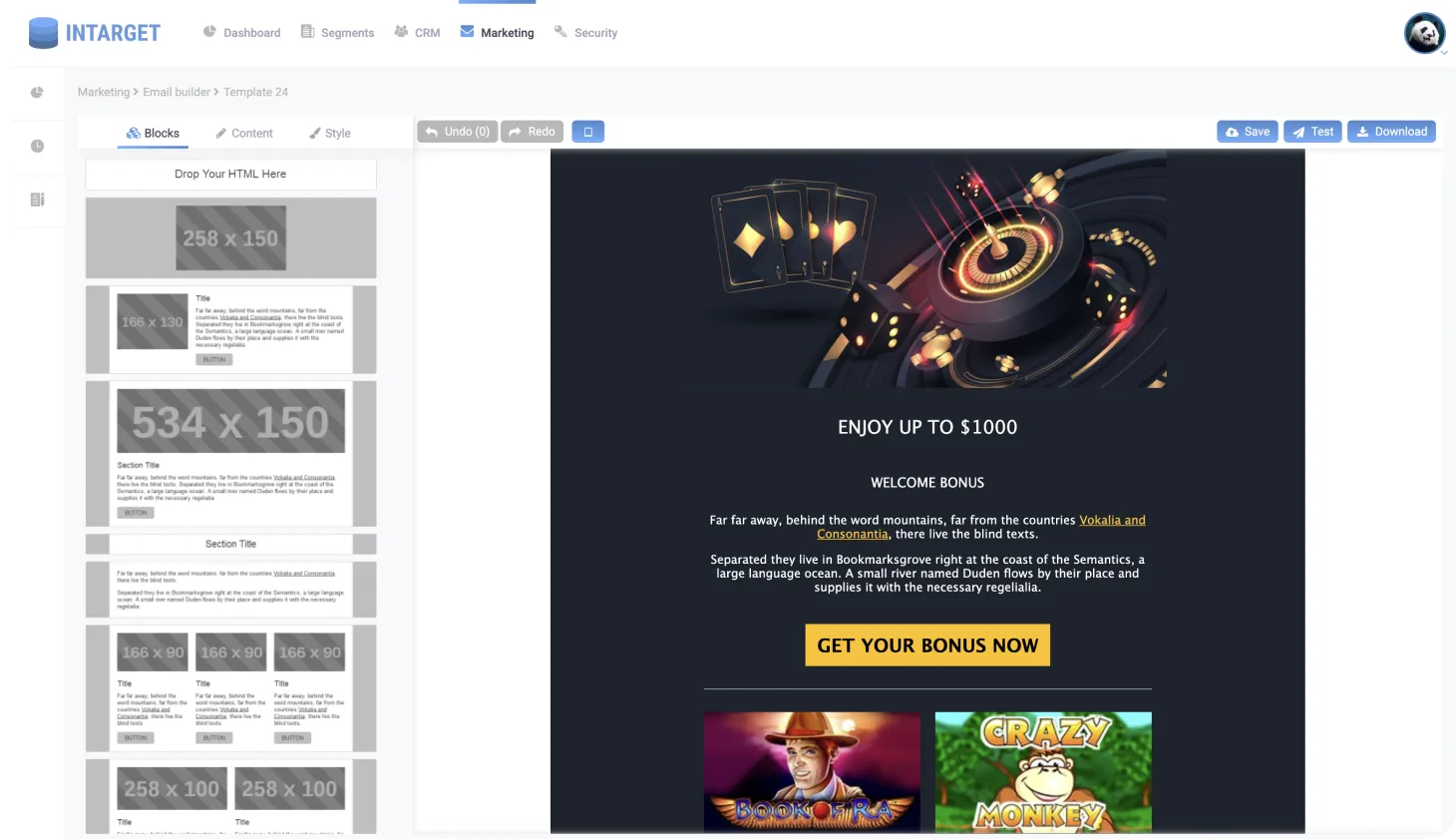 InTarget Email Builder
- Providing Excellent Customer Support Offer live chat, email and phone support in the languages of your markets, and publish the hours and expected response times. Most questions are about withdrawals, verification and bonus terms, so write clear answers to those first and give agents access to the player’s account history.
- Utilizing SMS Marketing SMS suits short, time-bound messages: a bonus that expires tonight, a tournament that starts in an hour. Keep one offer and one link per message, send only to players who agreed to receive SMS, and avoid night hours. In InTarget, an SMS step can be held to a delivery window in the player’s time zone, and its link is shortened with clicks counted.
- Implementing Customer Relationship Management (CRM)
A CRM gathers each player’s behavior in one place and turns it into segments and automated campaigns, so email, SMS and push are driven by what the player did. The InTarget CRM keeps one card per player with a single timeline of registration, logins, deposits, withdrawals, game sessions, bonuses and messages, and the same data defines segments (for example, players whose last deposit was more than 14 days ago) and starts the campaigns sent to them.
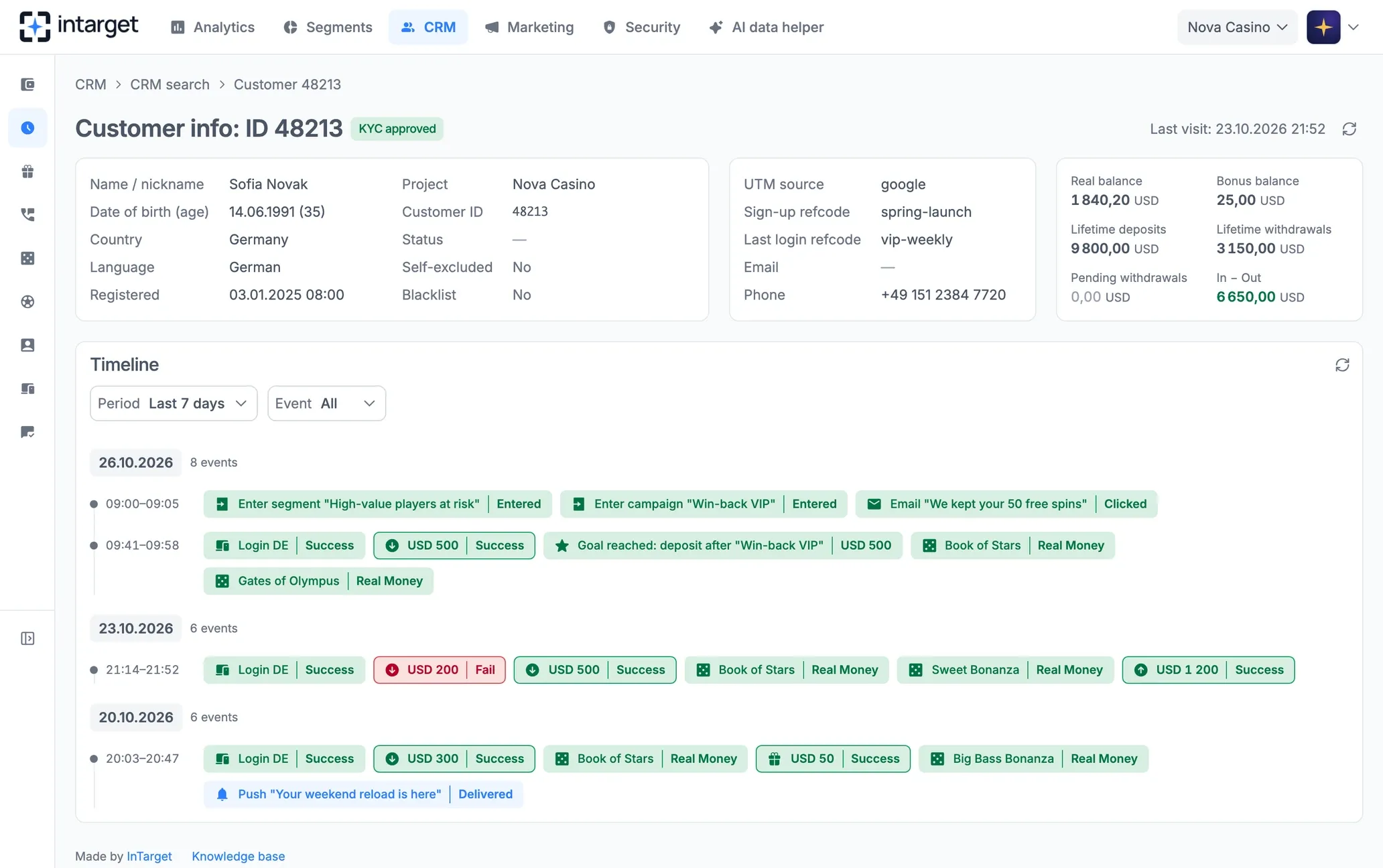 InTarget CRM
Conclusion
Do not start all eleven at once. Before launch, settle the market, the brand, the game range and the bonus terms. For acquisition, pick one or two channels (SEO and affiliates are the usual pair) and tag every source so you can compare them. From the first registrations on, run a welcome series by email marketing and SMS, and add segments and automated campaigns in the CRM as the player base grows.