
Predictive segmentation is transforming the iGaming industry by helping operators predict player behavior and take action before issues arise. Unlike traditional methods, which group players by static characteristics like age or location, predictive models analyze real-time data to deliver personalized experiences, reduce churn, and improve marketing efficiency. Here’s what you need to know:
- Spot At-Risk Players Early: Identify churn risks before players disengage.
- Personalized Content: Tailor game recommendations and promotions based on player preferences.
- Boost Marketing ROI: Focus budgets on high-value players to avoid wasted spending.
- Smarter Loyalty Programs: Offer rewards that resonate with different player types.
- Informed Product Development: Use player behavior data to improve games and features.
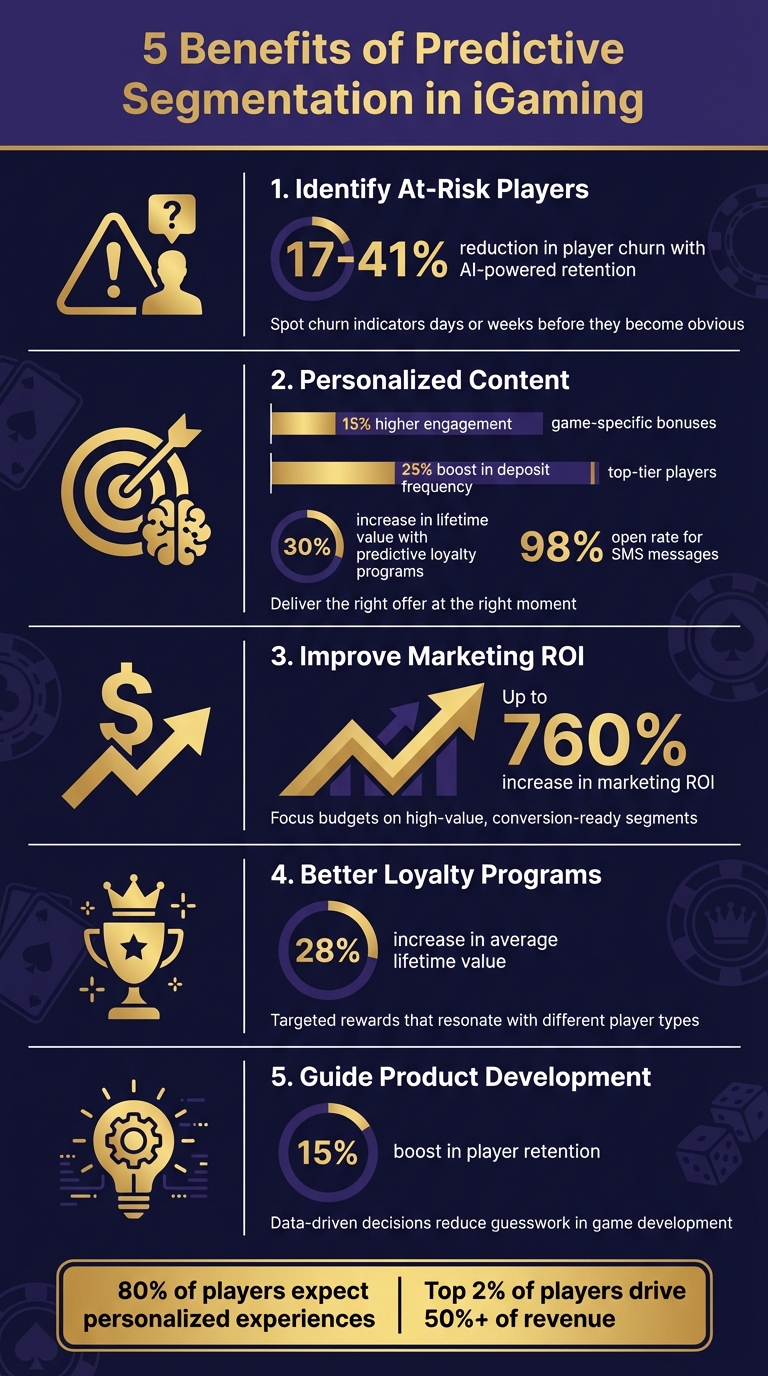
5 Benefits of Predictive Segmentation in iGaming: Key Statistics and Impact
1. Identify At-Risk Players Before They Leave
Predictive segmentation offers a proactive way to address player churn. Many casino operators traditionally wait until players have already disengaged before launching win-back campaigns. Unfortunately, by that point, the chances of re-engaging those players are significantly lower. Predictive models change the game by analyzing behavioral patterns to spot signs of disengagement days – or even weeks – before they become apparent.
"AI models often identify churn indicators days – even weeks – before they become obvious." – Jack Smith, iGaming Analyst
Churn isn’t just about inactivity. It can show up as shorter play sessions, changes in play schedules, or reduced responses to bonuses. Research backs this up, with AI-powered retention strategies cutting player churn by anywhere from 17% to 41%.
The secret lies in tracking key data signals, such as session activity, financial behaviors, engagement levels, and game preferences. For example, a high-value player who drops their average bet from $50 or a regular player who hasn’t logged in for two weeks would trigger alerts.
Once these at-risk players are flagged, operators can act quickly with preemptive measures. This might mean offering personalized deposit bonuses, free spins on their favorite games, or even reaching out directly. Tools like InTarget provide real-time insights, making it easier to intervene at the right moment. The goal? Keep players engaged before they drift away to a competitor.
2. Deliver Personalized Content and Game Recommendations
Generic promotions just don’t cut it when players expect experiences tailored to their preferences. By leveraging real-time and historical data, you can create promotions that feel personal and relevant.
Forget about mass bonus offers. Instead, focus on behavioral signals like session length, bet amounts, and favorite game types to craft promotions that resonate. For example, if someone enjoys high-volatility slots, sending them offers for low-stakes blackjack won’t make sense. Predictive models can track player habits, adjusting recommendations in real time as preferences evolve.
And the results back this up. Game-specific bonuses drive 15% higher engagement, while deposit rewards for top-tier players can boost deposit frequency by 25%. Even better, loyalty programs powered by predictive data can increase a player’s lifetime value by 30%.
Timing also plays a huge role here. Predictive segmentation identifies those perfect "micro-moments" – the times when players are most likely to engage. Platforms like InTarget can automate these moments, sending personalized push notifications or in-app messages exactly when they’re needed. SMS, for example, boasts an impressive 98% open rate.
3. Improve Marketing ROI and Reduce Wasted Spend
Predictive segmentation takes tailored content strategies to the next level by ensuring every marketing dollar works harder and smarter. Instead of spreading your budget thin across broad campaigns, this approach focuses resources on high-value, conversion-ready segments, avoiding wasted spend on less responsive audiences or those at risk of churn.
For example, predictive models like Lifetime Value (LTV) forecasting help pinpoint which players are likely to generate the most revenue over time. With this insight, you can allocate your budget more effectively, targeting the right players with the right offers.
The impact of predictive analytics can be staggering. By eliminating spending on underperforming channels and doubling down on strategies that deliver, marketing ROI can increase by as much as 760%. Advanced platforms make this possible by tracking every dollar back to its source, showing exactly which campaigns, messages, and channels drive results. This clarity allows you to cut underperforming initiatives and reinvest in the ones that truly work.
Timing plays a huge role here, too. Predictive segmentation identifies micro-moments – those key instances when players are most likely to engage and when retention costs are at their lowest. By stepping in with targeted offers at just the right time, you can prevent churn before it starts. This not only reduces wasted spend but also ensures you’re maximizing returns from your active players.
In short, precise budget targeting through predictive segmentation doesn’t just save money – it builds deeper player loyalty and increases long-term value.
4. Build Better Loyalty Programs That Increase Player Value
The days of one-size-fits-all loyalty programs are behind us. Generic rewards miss the mark when it comes to keeping players engaged. Instead, predictive segmentation allows operators to create detailed player profiles and offer rewards that truly connect with different types of players, boosting both engagement and lifetime value.
Take this for example: a high-stakes poker player is far more likely to respond to targeted deposit bonuses, while a casual slots player might be drawn to free spins or other game-specific rewards. One operator who embraced real-time segmentation saw a significant boost in retention by offering automated loyalty incentives tailored to individual gaming preferences.
What makes this approach so effective is its ability to focus resources where they’ll have the greatest impact. Predictive analytics help identify high-value segments, allowing operators to allocate their loyalty budgets strategically. For instance, a "VIP Potential" player – someone who plays frequently but spends less – could be encouraged to increase their wagers with enticing offers. On the other hand, an "At-Risk High Value" player showing signs of declining activity might respond to cashback offers or personalized outreach. In fact, this kind of targeted strategy has been shown to increase average lifetime value by 28%.
Another layer to consider is integrating player safety into loyalty programs. By monitoring changes in deposit behaviors or session lengths, operators can step in with timely interventions, such as self-exclusion options or moderated rewards. This not only builds trust but also strengthens long-term relationships with players.
Tools like InTarget, designed specifically for iGaming, make it easier to incorporate predictive segmentation into loyalty programs. These platforms simplify the process, allowing operators to create data-driven strategies without the complexity of traditional enterprise systems.
5. Guide Product Development with Player Behavior Data
Predictive segmentation is reshaping how games are developed by turning player behavior data into actionable insights. Without this data, creating games becomes a risky and expensive guessing game. Predictive segmentation provides a clear direction, helping teams focus on features that are likely to connect with players before significant time and resources are spent. These early insights also highlight the most important data signals for the next stages of development.
Data-driven decisions make a tangible difference. For example, in 2023, a major casino operator in Finland and Estonia used real-time segmentation to group players based on behavior, analyzing factors like game preferences and session lengths. By identifying which games kept players engaged and spotting where players dropped off quickly, the product team was able to refine their focus. The result? A 15% boost in player retention after a full year[1].
Specific behavioral signals play a critical role in guiding product decisions. Metrics like session duration help identify games that hold players’ attention versus those with high bounce rates. Changes in bet sizes can reveal when players are ready for higher-stakes experiences, while tracking category exploration might show when a sports bettor is open to trying casino games, creating cross-selling opportunities. Armed with these insights, teams can prioritize development efforts on features that enhance player engagement.
Predictive analytics also gives teams the ability to stay ahead of trends. By analyzing historical data and real-time patterns, they can anticipate demand spikes – such as increased activity during Champions League knockouts – and roll out relevant features when interest is at its peak. This proactive strategy is far more effective than scrambling to react after the moment has passed.
How to Implement Predictive Segmentation
You don’t need a full data science team or months of preparation to get started with predictive segmentation. The first step is collecting accurate and detailed data from your existing systems. This includes transaction records (like deposits, withdrawals, and payment methods), player activity logs (such as session duration, game choices, and win/loss ratios), and behavioral signals (e.g., login frequency, device type, and peak playing hours). To keep your segmentation dynamic, ensure data flows in real-time using webhooks, so segments update instantly.
Data quality is everything. Automated validations are a must to catch incomplete or erroneous data before it disrupts your models. Assign unique player IDs to unify data from multiple sources – your gaming platform, payment processors, and customer support systems. This approach ensures you’re working with a complete and reliable dataset. To keep your data fresh, use time-to-live (TTL) rules that automatically reassign inactive users to appropriate segments, eliminating the need for manual adjustments.
For small or mid-sized operators, tools like InTarget simplify the process. Their AI Data Helper allows teams to create advanced segments using plain English queries, such as: "Show me players who deposited over $500 last week but haven’t played in three days." This eliminates the need for coding and speeds up implementation. InTarget also automates data cleaning, verification, and tracks metrics specific to iGaming, like Gross Gaming Revenue (GGR) and First-Time Deposits (FTD). This means you can launch your segments in days, not weeks. Once live, keep your models accurate with regular reviews.
Understanding the difference between static and real-time segmentation is key to staying ahead. Models need consistent upkeep to remain effective. Shifts in the market, new games, or seasonal trends can lead to "prediction drift", reducing accuracy. To avoid frequent segment changes, set stable thresholds – for example, three consecutive low-activity sessions before moving a player to a new segment. Make it a habit to retest your models monthly, especially after major updates or entering new markets.
Real-time segmentation offers a clear advantage over static models. Static models update too slowly, while real-time segmentation allows you to deliver offers within minutes – at the exact moment a player’s intent is strongest. This speed is what turns predictive segmentation into a powerful tool for driving revenue.
Conclusion
Predictive segmentation has become a game-changer in the competitive iGaming world. The five key advantages we’ve discussed highlight how it can revolutionize your operations: spotting at-risk players before they leave, delivering content that feels personal, cutting down on wasted marketing spend, creating loyalty programs that truly boost player value, and making smarter product decisions based on real behavior. Operators using real-time segmentation have already seen measurable improvements in retention by automating tailored player experiences. This shift not only drives results but also simplifies implementation significantly.
The numbers back this up. With 80% of players expecting personalized experiences and the top 2% of players often driving more than 50% of revenue, precision isn’t just important – it’s critical. Predictive segmentation ensures you’re focusing your efforts where they matter most, while also automating engagement for casual players and staying compliant with responsible gaming regulations.
Platforms like InTarget make this process even more accessible, especially for small to mid-sized operators. You don’t need a full data science team or months of prep work. These tools allow you to query player data in simple terms and get up and running in days, not weeks. Now is the time to embrace predictive segmentation and secure your place in the ever-evolving iGaming market.
FAQs
How can predictive segmentation help retain players in iGaming?
Predictive segmentation plays a key role in keeping players engaged in the iGaming world by analyzing their real-time behaviors to predict what they might do next. It helps operators spot players who might be at risk of leaving and allows them to act quickly by offering personalized incentives like bonuses or custom promotions.
By providing timely and relevant offers, this strategy doesn’t just help reduce player churn – it also strengthens loyalty and increases the overall value of each player. Every interaction becomes more purposeful, creating a better and more engaging experience for players.
How does real-time data enhance personalized player experiences in iGaming?
Real-time data gives iGaming operators the ability to monitor player behavior as it happens. This means they can adjust and personalize experiences based on factors like game preferences, betting patterns, and activity levels. By addressing player needs instantly, operators can create interactions that feel more engaging and relevant, which can lead to higher satisfaction and loyalty.
For instance, if a player frequently engages with a particular game or betting style, operators can leverage this real-time information to present targeted promotions or personalized recommendations. This kind of tailored approach not only strengthens the bond with players but also helps maximize their overall value over time.
What’s the best way for small and mid-sized iGaming operators to use predictive segmentation?
Small and mid-sized iGaming operators can tap into the power of predictive segmentation by using accessible platforms like InTarget. These tools are built with smaller teams in mind, offering quick setup – sometimes in just a few days – and requiring minimal technical know-how. By harnessing real-time data and automation, operators can craft detailed player profiles based on behaviors such as deposit habits, game choices, and session activity.
To get the most out of this approach, focus on behavioral segmentation techniques like RFM analysis, session tracking, and grouping players by activity patterns. With AI-driven insights, you can predict player behaviors, such as the likelihood of churn or identifying high-value users, and use this information to design tailored campaigns that drive engagement and retention. Platforms like InTarget simplify these processes, delivering advanced features without the hefty price tag or complexity of larger-scale solutions.