
Tracking gameplay patterns in iGaming helps operators understand player behavior and improve retention. By analyzing data like session frequency, game preferences, and betting trends, you can identify engagement levels, predict churn, and create personalized campaigns.
Key Points:
- Session Data: Monitor session length and frequency to gauge interest. For example, a drop in sessions could signal disengagement.
- Game Choices: Track favorite games and navigation paths to refine recommendations and improve the user experience.
- Betting Trends: Changes in bet size or volume can highlight players at risk of leaving or ready for VIP offers.
- Real-Time Actions: Use automated triggers (e.g., inactivity or losing streaks) to send timely offers like bonuses or reactivation messages.
Specialized tools like InTarget simplify this process. Unlike traditional CRM systems, it integrates quickly, tracks iGaming-specific behaviors, and offers features like real-time alerts and natural language queries – all starting at $750/month.
Quick Comparison:
| Feature | Traditional CRM | InTarget |
|---|---|---|
| Setup Time | 3-6 months | 1 week |
| Monthly Cost | $5,300+ | $750+ |
| Target Audience | Large operators | Small to mid-sized |
| Technical Skills Needed | SQL/Data Engineers | No-code/AI-driven |
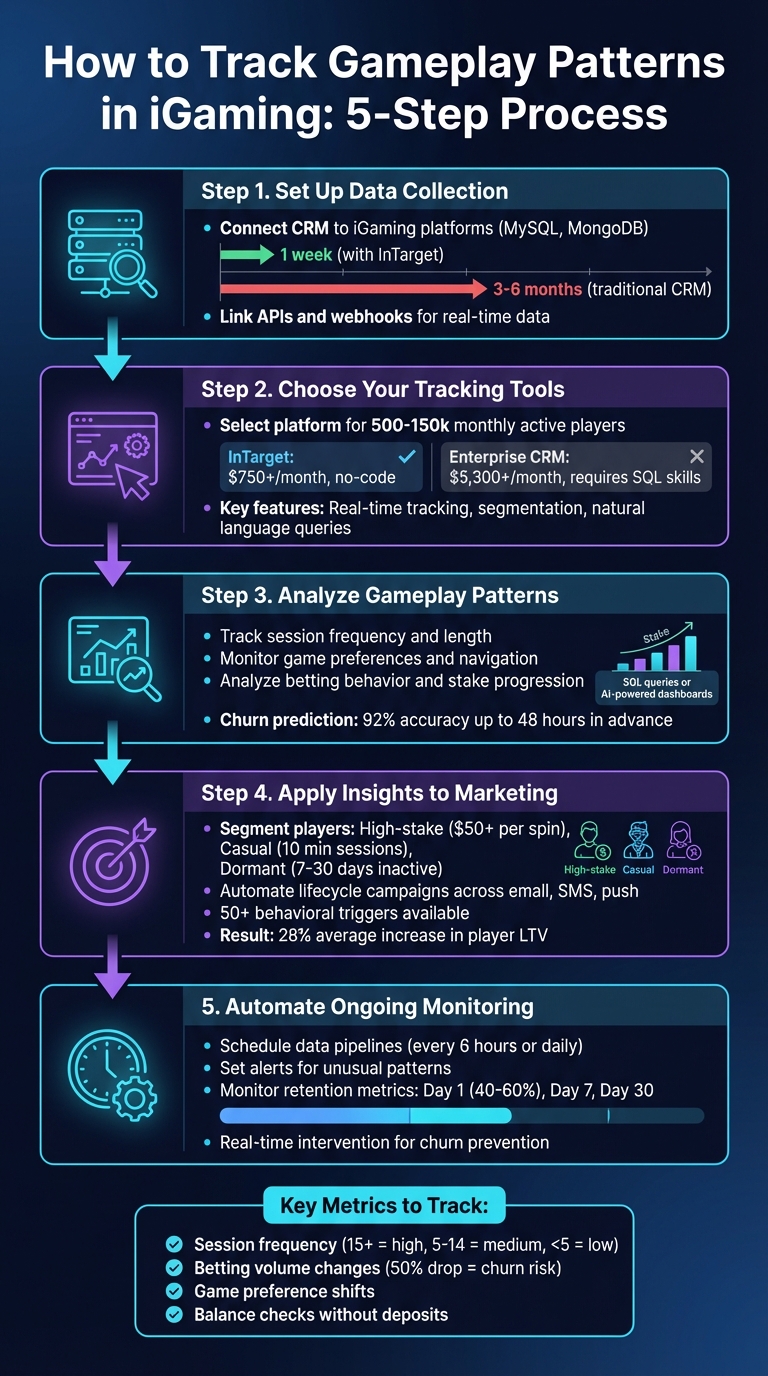
5-Step Process to Track iGaming Gameplay Patterns
What Gameplay Patterns to Track
To truly understand your players and cater to their needs, focus on tracking key gameplay patterns. Player actions provide insight into their engagement levels, content preferences, and spending habits. By analyzing these behaviors, you can differentiate between casual users and dedicated players who might be ready for VIP perks. Here’s how to hone in on the most telling patterns, like session habits, game choices, and betting trends.
Session Length and Frequency
How often and how long players engage with your platform is a strong indicator of their level of interest. For example, a player logging in 15 times a month with 30-minute sessions is clearly invested. On the other hand, a drop from 10 sessions to just 2 could signal waning interest.
Real-time data is essential here. A player who hasn’t logged in for a week might need a reactivation nudge, while someone completing their third session in a day could be ripe for a loyalty reward.
| Frequency Segment | Sessions per Month | Recommended Marketing Action |
|---|---|---|
| High Frequency | 15+ | Offer VIP upgrades or loyalty streak rewards |
| Medium Frequency | 5–14 | Provide targeted promotions and mid-tier rewards |
| Low Frequency | < 5 | Send reactivation offers or "We miss you" campaigns |
Game Preferences and Navigation Paths
The games players choose and how they move through your platform reveal valuable insights into their preferences. For instance, a player who spends 80% of their time on live blackjack but suddenly shifts to low-engagement slots might be losing interest. Monitoring these changes allows you to refine game recommendations and adjust lobby layouts to match their evolving tastes.
Navigation data can also highlight friction points. If users frequently visit the cashier page but fail to deposit, it signals hesitation. A well-timed deposit match offer could help overcome this barrier and encourage action.
Betting Behavior and Stake Progression
Betting patterns often paint the clearest picture of player commitment. Changes in bet sizes and betting volume are strong indicators of retention or churn. For example, a 50% drop in weekly betting volume is a red flag for potential churn. Similarly, players who repeatedly check their balance without placing bets are showing signs of hesitation.
Stake progression is another critical metric. Players who steadily increase their bets might be prime candidates for VIP outreach, while those who suddenly lower their stakes after a losing streak may need encouragement, like a small loyalty bonus, to stay engaged.
| Churn Signal | Behavioral Pattern | Recommended Real-Time Action |
|---|---|---|
| Activity Drop | 50% drop in weekly betting volume | Trigger a re-engagement campaign with free spins |
| Wallet Drop | Balance checks without deposits | Send a deposit match or cashback offer |
| Loss Streak | Losing multiple bets consecutively | Offer a small loyalty bonus or intervention message |
| Betting Pattern Change | Sharp drop to smaller stakes | Initiate personalized outreach or VIP engagement |
| Exit Intent | Cursor hovers near close/back button | Display an on-site "Wait!" bonus or popup offer |
Automating these responses ensures timely interventions. For example, setting up a trigger to send a loyalty bonus after a player hits a loss threshold can help maintain their engagement and prevent churn.
Step 1: Set Up Data Collection
Start by linking your CRM to your iGaming platform’s databases – such as MySQL for transactional data and MongoDB for session details. This connection is the foundation for gaining real-time insights and analyzing historical trends.
Connect CRM Tools to iGaming Platforms
To begin, identify the key data tables that hold information about deposits, bets, and player sessions. Obtain API credentials or database connection strings from your platform provider. Once you have access, test the connection by pulling sample data to ensure everything is functioning properly.
Platforms like InTarget simplify this process by seamlessly integrating with casino and sportsbook platforms through APIs and webhooks. Designed specifically for iGaming, InTarget tracks 50+ behavior-based event triggers, such as registrations, logins, deposits, and gameplay actions. What’s more, the setup process typically takes about one week, a huge time-saver compared to the three to six months often required for generic enterprise CRMs. As one Crozdesk user shared:
"Painless integration and customization; CRM completely made for iGaming businesses."
Ensure your CRM connection is secure using SSL/TLS encryption. For US operators, it’s essential to comply with regulations by using read-only API keys limited to gameplay tables and anonymizing any personally identifiable information where possible. Begin by importing historical records through an initial sync, then activate real-time data pipelines for live events like bet placements or session starts. This hybrid approach gives you the depth of historical data while enabling quick responses to real-time player activities.
Once your data is flowing securely, you’ll be ready to select the right tracking tools and dive into analyzing player behavior in real time.
Step 2: Choose Your Tracking Tools
Once your data pipelines are set up, it’s time to put that data to work. The right tracking tool can make all the difference in how effectively you interpret gameplay data. For operators managing between 500 and 150,000 monthly active players, the ideal platform should offer real-time tracking, segmentation, and easy-to-understand insights – all without requiring a team of data engineers.
Why Consider InTarget for iGaming
InTarget is designed specifically for iGaming operators who need powerful tools without unnecessary complexity. It provides a complete view of each player’s activity – from transactions to spins – eliminating the hassle of switching between multiple dashboards.
With InTarget, marketing teams can use natural language queries to get instant answers. Want to know, "Which players haven’t deposited in 10 days?" or "How did last week’s cashback campaign perform?" Just ask, and the platform delivers data-driven insights – no SQL skills needed. As Vlasta C., Head of Retention, shared:
"InTarget transformed our retention strategy completely. We increased player LTV by 35% in just 3 months."
InTarget also tracks key behavior-based events like registrations, logins, deposits, and gameplay actions in real time. This allows you to quickly identify churn risks, spot high-value players, and launch targeted campaigns within minutes.
Next, let’s see how InTarget stacks up against traditional enterprise CRM platforms.
InTarget vs. Enterprise CRM Platforms
Enterprise platforms like Optimove (used by over half of the operators ranked in the 2025 EGR Power 50) offer advanced features like predictive modeling and multi-channel orchestration. However, these solutions are typically built for Tier-1 operators with larger budgets and dedicated data teams. In contrast, InTarget focuses on simplicity and accessibility.
| Feature | InTarget | Enterprise CRM (Optimove/Fast Track) |
|---|---|---|
| Target Audience | Small to mid-sized (500–150k players) | Large-scale/Tier-1 operators |
| Technical Requirement | No-code / Natural language AI | Often requires SQL/Data engineers |
| Monthly Cost | From $800 | $5,300+ |
| Player Tracking | Real-time casino/sports/transaction history | Advanced predictive/multi-channel modeling |
InTarget’s straightforward pricing and no-code approach make it an excellent choice for teams looking to track gameplay patterns and launch campaigns without needing constant developer support. As Daniel V., Casino Manager, noted:
"Best investment we made this year, hands down. The ROI tracking alone pays for itself. We finally know which campaigns drive deposits and which don’t."
The key is to choose a platform that aligns with your operational needs and resources. For lean teams that need quick, actionable insights, InTarget offers the clarity and speed to help your marketing team hit the ground running.
Step 3: Analyze Gameplay Patterns
Take raw data and turn it into insights that matter. The goal? Spot patterns that reveal player behavior – whether someone’s about to churn, becoming a high-stakes player, or just needs a little encouragement to stay engaged.
Use SQL Queries and Dashboards
SQL queries are your go-to for digging into player activity. For example, to identify highly active players based on session frequency, try this:
SELECT player_id, AVG(session_duration) as avg_session_length, COUNT(*) as session_count FROM sessions WHERE date >= '2025-01-01' GROUP BY player_id HAVING COUNT(*) > 5;
This pulls data on players with at least five sessions since the start of the year, helping you pinpoint your most engaged users.
Want to understand game preferences? Use:
SELECT player_id, game_type, COUNT(*) as plays, AVG(stake) as avg_stake FROM bets GROUP BY player_id, game_type ORDER BY plays DESC;
This shows whether players prefer slots, blackjack, or sports betting – and highlights their average stakes. To spot potential high-rollers testing the waters with bigger bets, here’s another useful query:
SELECT player_id, AVG(stake) as avg_bet, MAX(stake) - MIN(stake) as stake_progression FROM bets GROUP BY player_id;
A wide range in stake amounts can indicate players experimenting with higher limits.
For those who want to skip writing queries, platforms like InTarget make life easier. With natural language inputs, you can ask questions and get instant insights – no coding required. InTarget’s AI data helper tracks everything from a player’s first spin to their withdrawals, offering a complete timeline. As one Crozdesk reviewer put it:
"Segmentation system is powerful and easy-to-use. CRM completely made for iGaming businesses."
Visual tools like line charts, heatmaps, and funnels are essential for tracking metrics. Whether you’re using built-in dashboards or external tools, combining these visuals with real-time data gives you a clear view of trends and helps you act quickly.
Once you’ve got the numbers, it’s time to focus on retention and churn signals.
Spot Retention Trends and Churn Signals
Cohort analysis is a powerful way to measure retention rates. Group players by their first deposit date, then track how many return on Day 1, Day 7, and Day 30. Here’s a typical SQL query for Day 1 retention:
SELECT cohort_date, COUNT(DISTINCT CASE WHEN activity_date = cohort_date THEN player_id END) / COUNT(DISTINCT player_id) as D1_retention FROM player_activity GROUP BY cohort_date;
In the iGaming world, Day 1 retention rates often range from 40% to 60%, with slot players generally showing stronger retention than sports bettors.
Keep an eye on short sessions, inactivity, or sudden drops in betting amounts. For example, this query flags at-risk players with fewer than three short sessions in the past week:
SELECT player_id FROM sessions WHERE session_duration < 300 AND date > CURRENT_DATE - INTERVAL '7 days' GROUP BY player_id HAVING COUNT(*) < 3;
Some AI tools can even predict churn with 92% accuracy up to 48 hours in advance, giving you time to step in with targeted offers.
| Churn Signal | Behavioral Pattern | Recommended Action |
|---|---|---|
| Activity Drop | 50% drop in weekly betting volume | Launch a re-engagement campaign with free spins |
| Account Inactivity | No login for 7 days | Send an automated push notification |
| Loss Streak | Multiple consecutive losing bets | Offer a small loyalty bonus or a responsible gaming prompt |
| VIP At-Risk | High-value player inactive 3 days | Personal outreach or exclusive reward |
Real-time analytics take things a step further. Spot latency spikes, abrupt exits, or three consecutive losses, and you can trigger immediate interventions – like offering a 20% reload bonus – before players decide to leave. This proactive strategy not only helps with retention but also supports responsible gaming by catching unusual behavior early on.
Step 4: Apply Insights to Marketing Campaigns
Now it’s time to put those insights to work by delivering timely, personalized messages that resonate with your audience.
Segment Players for Personalized Campaigns
Start by grouping players based on their behavior. For example:
- High-stake players: These are individuals consistently betting over $50 per spin or wager. Send them personalized SMS offers, like 20% cashback on their next $100+ bet.
- Casual users: These players have shorter sessions (under 10 minutes) and play less frequently. Push notifications offering 10 free spins on their favorite slot games can work wonders here.
- Dormant players: If a user has been inactive for 7–30 days, re-engage them with no-deposit bonus emails – such as $10 free credit to entice them back.
You can also segment by game preference. For instance, players who favor slots might appreciate notifications about new game launches, while sports bettors could receive alerts tied to major events like NFL games. By using CRM analytics to track behaviors like session length, stake progression, and navigation patterns, you can fine-tune your campaigns. Whether a player heads straight to live tables or spends time exploring slot options, these insights allow for highly targeted messaging.
Tools like InTarget simplify this process by automating segmentation based on gameplay data. Reviews highlight its ease of use and effectiveness, especially tailored for the iGaming industry. This level of personalization ensures campaigns feel relevant, boosting engagement and conversion rates.
These segmented audiences form the foundation for dynamic lifecycle marketing campaigns.
Automate Lifecycle Marketing
Lifecycle marketing automation allows you to send real-time messages triggered by specific gameplay behaviors. For instance, if a player experiences three consecutive losses, InTarget can instantly send an SMS offering a cashback deal to soften the blow. Similarly, if a high-stakes player goes inactive for three days, the system might send a push notification with an exclusive invite to a high-roller tournament.
InTarget supports more than 50 event triggers, including registration, first deposits, win streaks, loss streaks, and session drop-offs. Its visual campaign builder enables you to create multichannel workflows – email, SMS, and push notifications – that align with player actions.
The process is straightforward: integrate gameplay data, set up triggers (like inactivity or stake increases), map behaviors to lifecycle stages (onboarding, retention, VIP), and let the automation handle the rest. Using tools like UTM attribution and conversion metrics for each campaign step, you can identify which messages are driving redeposits most effectively. Operators leveraging automated lifecycle marketing have reported an average 28% increase in lifetime value (LTV), proving that behavior-driven, timely campaigns outperform generic mass messaging.
Step 5: Automate Ongoing Monitoring
Once your campaign is live, keeping an eye on gameplay patterns becomes crucial. Automating this process allows you to maintain real-time insights and respond quickly to changes without constant manual effort.
Schedule Data Pipelines
Data pipelines are like automated delivery systems for your data. They regularly pull gameplay information from your casino or sportsbook platform and feed it into your CRM. Instead of manually exporting reports every day, you can set these pipelines to run automatically – say, every 6 hours or daily at midnight (ET). This ensures your dashboards always display the latest player behavior.
Setting up a pipeline is fairly simple. Connect your platform’s API to your CRM, decide on a schedule, map out the key data fields, and test the process to ensure everything flows smoothly. For instance, a US-based online casino using InTarget might schedule pipelines to update multiple times a day. These updates could include metrics like average session duration, which feed directly into retention dashboards to help track player engagement.
Once your pipelines are up and running, you can shift your focus to creating real-time alerts for significant changes in player behavior.
Set Alerts for Unusual Patterns
Automated alerts help you catch critical shifts in player behavior, whether it’s a potential issue with responsible gaming (like sessions exceeding two hours) or a chance to re-engage a player (such as a high-value user going inactive for three days). These alerts can be configured in your CRM using historical data as a guide. For example, you might set an alert to trigger an SMS if a player’s session frequency drops by 50% compared to the previous week or if their bets suddenly triple in size.
InTarget makes setting up these alerts straightforward, even for teams without dedicated data analysts. Alerts can trigger actions like sending a push notification (“You’ve been playing for 2+ hours – how about a break?”) or an SMS offering a cashback deal to re-engage a lapsed player. The key is finding the right balance when setting thresholds: if they’re too tight, you’ll get overwhelmed with false alarms; too loose, and you might miss early signs of churn, like a player showing signs of inactivity 48 hours before they stop playing entirely.
Conclusion
Tracking gameplay patterns effectively requires a structured approach, and it boils down to five essential steps: linking your casino or sportsbook platform to a CRM, selecting the right tracking tools, analyzing player behavior to identify retention signals, using those insights to create personalized campaigns, and automating the monitoring process. Together, these steps transform raw data into actionable strategies that can increase player lifetime value and reduce churn.
For smaller operators, accessibility has often been a roadblock. That’s where InTarget steps in. Designed specifically for iGaming, it addresses this challenge with a setup time of as little as one week and pricing starting at $750 per month. It offers powerful features like behavioral triggers, multi-channel campaigns, and real-time dashboards – without the complexity or cost of enterprise-level solutions.
InTarget’s iGaming-focused tools include multi-wallet tracking (handling real and bonus balances with crypto compatibility), automatic UTM tagging for revenue attribution, and over 50 behavioral triggers (such as session drops or wallet declines). Its built-in AI assistant makes data accessible to everyone. For example, marketers can ask simple questions like, “Which high-value players haven’t deposited in the last 10 days?” and receive instant answers – no SQL knowledge or data analyst required. This tailored functionality highlights the importance of specialized tools for achieving long-term success.
Whether you’re managing a crypto casino or a regional sportsbook, the ability to track, analyze, and act on gameplay data in real time is critical. With the right tools and a clear strategy, even smaller teams can compete with larger operators and turn player insights into measurable revenue growth.
FAQs
How can tracking gameplay patterns help retain players in iGaming?
By studying gameplay patterns, iGaming operators can better understand player behaviors and preferences. This insight allows them to create personalized offers and provide timely responses, which helps maintain player engagement, reduce churn, and increase overall player lifetime value.
For instance, tracking these patterns can highlight when a player starts to lose interest. With this information, operators can step in with customized promotions or rewards to reignite their enthusiasm. It also enables more strategic marketing decisions, ensuring campaigns resonate with players and address their specific needs.
What makes InTarget a better choice than traditional CRM systems for iGaming operators?
InTarget is a CRM tailored specifically for the iGaming world, offering a simple yet effective solution for small to mid-sized online casinos and sportsbooks. Unlike larger, enterprise-level platforms that often come with hefty costs and complicated setups, InTarget is designed to be quick to implement and easy to navigate. This means marketing teams can handle tasks like creating campaigns, segmenting players, and tracking performance – all without needing help from developers or data analysts.
With real-time data integration and AI-driven insights, InTarget enables operators to react instantly to player activities. Whether it’s reaching out to inactive users or offering bonuses during gameplay, the platform is built to boost player engagement and retention. Its clear pricing structure and intuitive interface make it a smart choice for businesses aiming to grow efficiently without the headaches of traditional CRMs. By focusing on tools that meet the specific needs of the iGaming industry, InTarget helps operators strengthen player loyalty and improve ROI with minimal hassle.
How does real-time data improve marketing strategies in iGaming?
Real-time data gives iGaming operators the ability to respond instantly to how players behave. This means they can offer personalized promotions, reach out to re-engage players at the right moment, and handle risks proactively. By studying live player activity, operators can craft campaigns that align with individual preferences, increasing both engagement and retention.
It also enables operators to tackle challenges like player inactivity or spotting unusual betting patterns right away. This quick action not only improves the player experience but also makes marketing efforts more effective. This kind of responsiveness strengthens player relationships and encourages long-term loyalty.